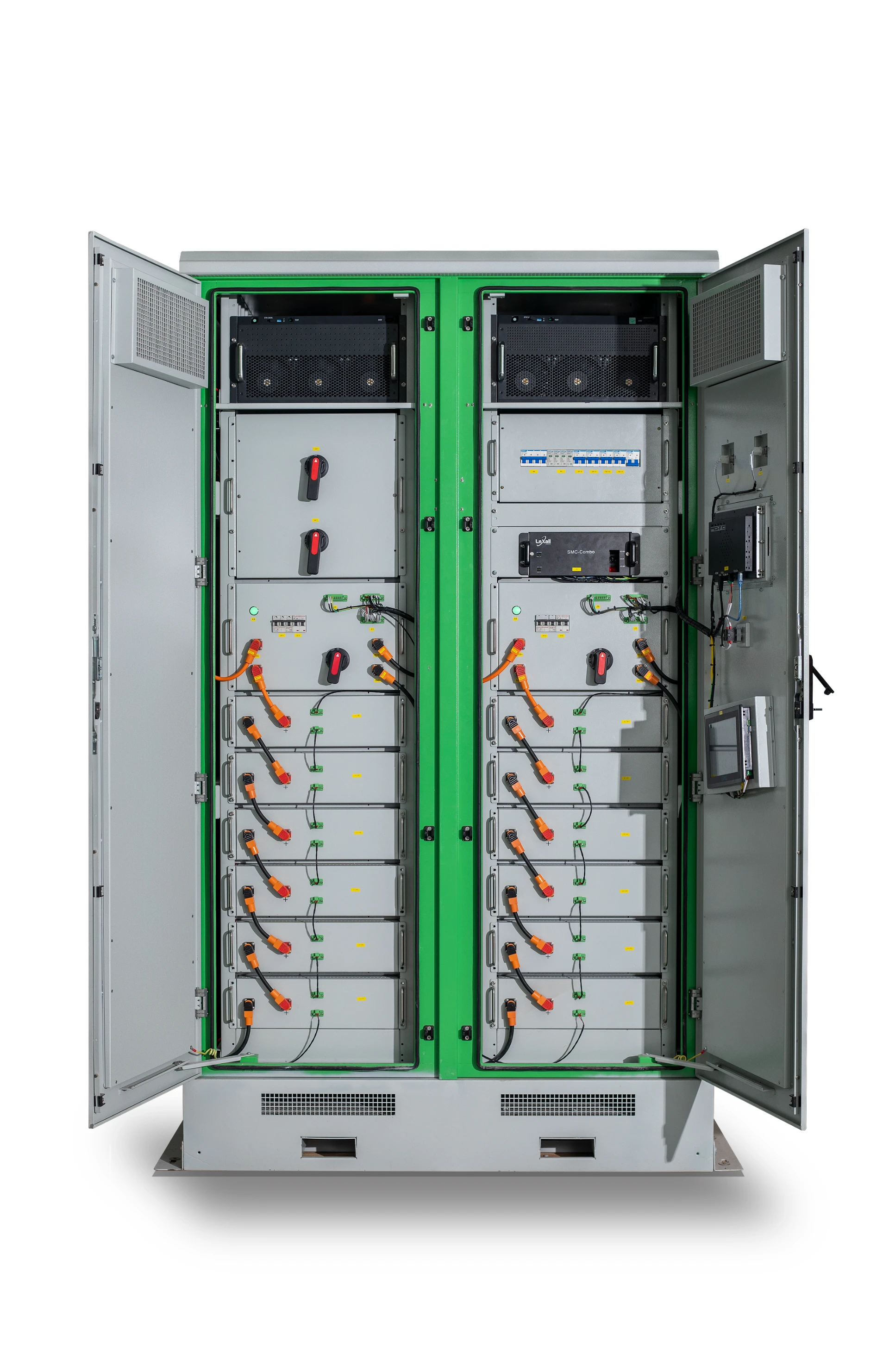

Top Industrial Battery Energy Storage System Companies Guide
When evaluating industrial-grade power infrastructure, the focus has shifted from simple capacity to intelligent integration. For commercial and industrial (C&I) operators, the challenge lies in balancing energy density with long-term stability and safety. A high-performance lithium energy storage system is no longer just a battery bank but a complex orchestration of thermal management, active balancing, and IoT-driven energy management. By integrating high-precision SOX estimation and modular design, modern systems can now provide flexible capacity configurations that adapt to specific operational loads, ensuring that energy availability remains consistent even under volatile demand cycles.

Engineering the Core: Intelligent Power Control and High-Precision Monitoring
The efficiency of a large-scale energy storage system depends heavily on the precision of its control architecture. The implementation of the "U-POWER" power control system allows for seamless synchronization between the energy source and the grid, minimizing conversion losses. Central to this is high-precision battery SOX (State of Charge, State of Health, State of Power) estimation, which prevents over-discharge and over-charge cycles, thereby extending the operational lifespan of the LFP cells.
To maintain this precision, a three-tier BMS architecture is employed, utilizing active equalization to ensure that every cell within the module operates at an optimal voltage. This removes the common bottleneck of "weak cells" that typically limit the overall capacity of a battery string. When combined with Ethernet, RS-485, and CAN interfaces supporting Modbus-TCP and IEC61850 protocols, the system provides real-time transparency into the health of the energy asset.

Thermal Stability and Multi-Level Safety Protocols
Thermal runaway remains the primary risk in lithium-ion deployments. To mitigate this, an intelligent thermostatic design is utilized to isolate hot and cold air, preventing internal heat accumulation. This is further enhanced by a variable frequency air cooling program that adjusts cooling intensity based on the actual thermal load, optimizing auxiliary power consumption while maintaining cells within their ideal temperature window of -40 to 55℃.
Safety is reinforced through a multi-layered defense strategy. The system incorporates pack-level detection coupled with an automatic extinguishing system that combines gas, smoke, and temperature sensors. Depending on the configuration, the firefighting program utilizes HFC227 and water-based suppression, with optional C6F12O for high-risk environments. This rigorous approach ensures that potential faults are isolated and neutralized before they can escalate, meeting strict international standards such as UL9540A and IEC62619.
Application Logic for Commercial and Industrial Energy Optimization
Industrial users typically deploy these systems to solve three primary problems: peak shaving, load shifting, and backup power reliability. In a C&I context, the modular design allows for flexible capacity scaling, meaning a facility can start with a 20HC container and expand to 40HC as their energy needs grow. The use of LFP (Lithium Iron Phosphate) chemistry ensures a cycle life of 8000 cycles at 90% DOD, making it a viable long-term financial investment for energy cost reduction.
From an operational perspective, the integration of IoT technology enables a centralized Energy Management System (EMS) to automate discharge cycles based on time-of-use (TOU) electricity pricing. By storing energy during off-peak hours and discharging during peak tariffs, companies can significantly lower their operational expenditure. The IP65 protection grade and C4/C5 anti-corrosion ratings ensure that these units can be deployed in harsh outdoor environments, from coastal regions to industrial zones, without compromising internal electronics.
Technical Specifications Comparison by Container Size
| Parameter | Container 20HC | Container 30HC | Container 40HC | Common Specification |
|---|---|---|---|---|
| Full Energy | 3.65MWh | 6.02MWh | 7.53MWh | LFP Chemistry |
| Available Energy | 2.67~3.65MWh | 4.52~6.02MWh | 6.67~7.53MWh | ≥94% Efficiency |
| Voltage Range | 1000V-1500V | 1000V-1500V | 1000V-1500V | 0.5C Ratio |
| Cycle Life | 8000 Cycles | 8000 Cycles | 8000 Cycles | 90% DOD |
| Dimensions (mm) | 605824382896 | 912524382896 | 1219224382896 | IP65 Rated |
Strategic Supplier Evaluation for Energy Infrastructure
When sourcing from various battery energy storage system companies, procurement managers must look beyond the nameplate capacity. The true value lies in the "in-house" capability of the provider. A supplier that controls the design of the BMS, EMS, and thermal management systems can offer far superior customization and faster response times to technical failures than a simple integrator of third-party components.
Key evaluation criteria should include the ability to provide full life-cycle quality tracking and analysis. By monitoring the health of cells from production through deployment, the provider can predict maintenance needs before they result in downtime. Furthermore, certifications such as UL1973 and UN38.3 are non-negotiable for global deployments, as they guarantee the system's safety during transport and operation across different regulatory jurisdictions.
Future Trends in Distributed Energy Resource Management
The trajectory of energy storage is moving toward higher voltage systems (1500V+) to reduce cabling losses and improve round-trip efficiency. We are also seeing a shift toward more aggressive "Active Balancing" solutions that can shift energy between cells in real-time, rather than simply dissipating excess energy as heat. This transition is critical for maximizing the return on investment in large-scale C&I projects.
Moreover, the convergence of IoT and clean energy is enabling the creation of Virtual Power Plants (VPPs). By networking distributed storage systems, companies can not only manage their own energy but also participate in grid frequency regulation and demand response programs. This transforms a cost-saving asset into a revenue-generating one, provided the underlying hardware is robust enough to handle high-frequency cycling and precise control commands.
Frequently Asked Questions on Industrial Energy Storage
What is the difference between full energy and available energy in these systems?
Full energy refers to the total theoretical capacity of the installed cells. Available energy is the actual usable capacity after accounting for the Depth of Discharge (DOD) limits and system reserves required to protect the battery's health and ensure long-term cycle life.
How does the active balancing solution improve battery performance?
Unlike passive balancing which wastes excess energy as heat, active balancing redistributes charge from higher-voltage cells to lower-voltage cells. This ensures all cells are utilized fully, prevents individual cell over-stress, and increases the overall usable capacity of the pack.
Can these containerized systems be deployed in extreme climates?
Yes, the systems are designed for temperatures ranging from -40 to 55℃. They feature an intelligent variable frequency air cooling system and a thermostatic design that isolates hot and cold air, maintaining an optimal internal environment regardless of external conditions.
What safety certifications should I look for in a BESS provider?
Crucial certifications include UL1973 for stationary battery safety, UL9540A for thermal runaway fire testing, IEC62619 for industrial applications, and UN38.3 for the safe transport of lithium batteries.
What is the expected lifespan of an LFP-based industrial storage system?
Based on the technical specifications, these systems are rated for 8000 cycles at 90% DOD with an End-of-Life (EOL) threshold of ≥70%. Depending on the daily cycling frequency, this typically translates to over 10-15 years of operational service.
How is the system protected against environmental corrosion?
The external cabinets are designed with an IP65 protection grade and standard C4 anti-corrosion rating, with C5 available as an option for highly corrosive environments like coastal areas or chemical plants.
Technical References and Industry Standards
- IEC - International Electrotechnical Commission Standards for Energy Storage
- UL Solutions - Safety Standards for Battery Energy Storage Systems
- International Energy Agency - Grid-Scale Storage Technology Reports
- National Renewable Energy Laboratory - BESS Performance Analysis
Selecting the right energy storage infrastructure requires a deep understanding of both electrochemical limits and electrical engineering. By prioritizing integrated thermal management and high-precision BMS, industrial operators can ensure a safe, stable, and profitable transition to clean energy.
Related Energy Insights