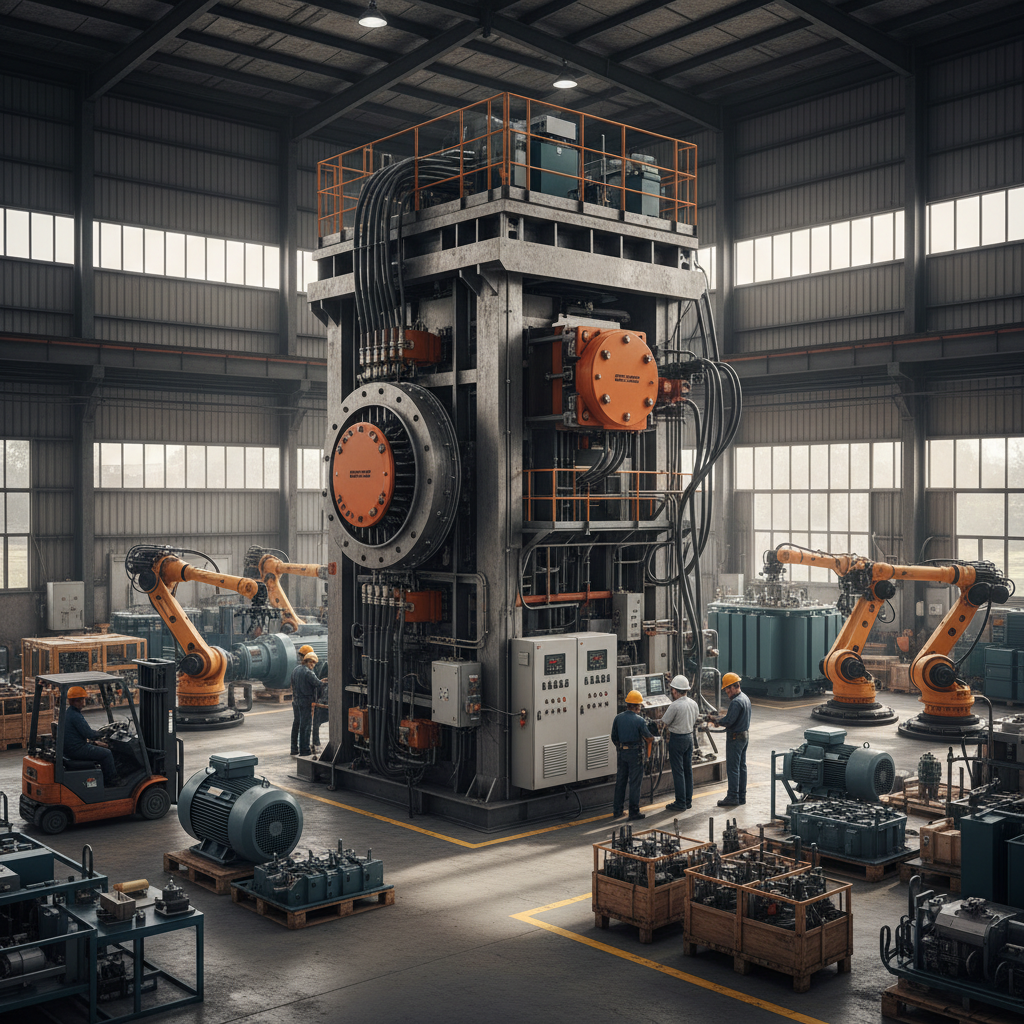
In the modern era of industrial volatility and climate instability, ensuring a reliable outdoor emergency power supply wattage has become a critical priority for global infrastructure. Whether it is maintaining the operational integrity of a remote telecommunications hub or powering emergency medical equipment during a grid failure, the capacity to deploy high-wattage power systems outdoors determines the resilience of essential services.
The global shift toward sustainable energy has accelerated the adoption of advanced Lithium Iron Phosphate (LFP) technologies, allowing for higher energy density and safer operation in harsh environments. Understanding the nuances of outdoor emergency power supply wattage is no longer just a technical requirement for engineers; it is a strategic necessity for organizations aiming to eliminate downtime and ensure continuity in the face of unpredictable power outages.
From a commercial perspective, the evolution of C&I (Commercial and Industrial) energy storage systems has transformed how we perceive emergency power. By integrating modular PCS (Power Conversion Systems) and intelligent thermal management, today's systems provide a scalable approach to wattage requirements, moving away from static generators toward dynamic, intelligent, and eco-friendly power reservoirs.
Global Relevance of Outdoor Emergency Power Supply Wattage
On a global scale, the demand for stable outdoor emergency power supply wattage is driven by the increasing frequency of extreme weather events and the decentralization of energy grids. According to international industrial standards, the ability to maintain critical loads during a total blackout is the primary benchmark for facility safety. In regions with unstable grids, high-wattage outdoor storage serves as the last line of defense for critical infrastructure.
Furthermore, the transition to Net-Zero emissions has rendered traditional diesel generators obsolete due to noise pollution and carbon footprints. The industry is now pivoting toward LFP-based outdoor cabinets that provide 100KW to 200KW of power, ensuring that emergency wattage is available instantaneously without the environmental cost, aligning with ISO environmental management goals.
Defining Outdoor Emergency Power Supply Wattage for Industry
In technical terms, outdoor emergency power supply wattage refers to the maximum real-time power output (measured in kilowatts or megawatts) that an outdoor battery energy storage system (BESS) can deliver to a load during a grid failure. Unlike total capacity (kWh), which tells you how long the power lasts, wattage defines what equipment you can actually run. For an industrial site, this means the difference between powering a few lights or maintaining a full production line.
Modern systems, such as the 100KW and 200KW outdoor cabinets, utilize high-voltage DC configurations (e.g., DC819.2V) and Modular PCS to convert stored chemical energy into usable electrical power. The "emergency" aspect implies that this wattage must be available through seamless switching, often managed by an Energy Management System (EMS) that detects voltage drops in milliseconds to prevent system crashes.
For humanitarian needs and remote industrial zones, this wattage is the heartbeat of survival. Whether it's a 50KW modular PCS for a small field clinic or a 200KW system for a remote mining operation, the precise calculation of required wattage ensures that the system is neither undersized (leading to failure) nor oversized (leading to unnecessary capital expenditure).
Core Components Ensuring High Power Stability
The reliability of outdoor emergency power supply wattage depends heavily on the cell chemistry. Lithium Iron Phosphate (LFP) is the gold standard here, offering a 3.2V/100Ah cell parameter that provides a stable discharge ratio of 1.0C. This stability ensures that the wattage does not fluctuate wildly under heavy loads, providing a "clean" power source for sensitive electronic equipment.
Thermal management is the silent guardian of wattage. High power output generates significant heat; if not managed, the system will "derate" or reduce its wattage to prevent overheating. Our intellectual property air duct design allows each cell to be fully cooled, achieving a cooling effect comparable to liquid-cooled systems but with significantly lower energy consumption, ensuring the system maintains its rated 100KW or 200KW output even in temperatures up to 45℃.
Finally, grid-level protection and modular design ensure that wattage is delivered safely. With multi-layer fuse protection and real-time online diagnosis, the system prevents circulation caused by cell voltage differences. The modular nature of the PCS and battery packs means that if one module fails, the system can still provide a partial outdoor emergency power supply wattage, avoiding a total system collapse.
Global Applications of High-Wattage Storage Systems
The application of high-wattage outdoor power is diverse. In post-disaster relief operations, rapid deployment cabinets are used to establish communication hubs and power medical tents. Because these systems require no container installation or debugging, they can be transported and activated immediately, providing critical outdoor emergency power supply wattage where the grid has been completely obliterated.
In remote industrial zones, such as offshore wind farms or mining sites, these systems act as "peak shavers" and emergency backups. By utilizing an IP55 protection level, the cabinets withstand humidity from 0%-95% and temperatures from -30℃ to 50℃, ensuring that high-wattage power is available regardless of the geographic location or environmental severity.
Performance Efficiency by Outdoor Emergency Power Supply Wattage Method
Long-Term Value of Scalable Power Solutions
The true value of investing in high outdoor emergency power supply wattage lies in scalability. Traditional power systems are static; once you hit the capacity limit, you must replace the entire unit. Modular design allows for "dynamic expansion," meaning as a business grows or as emergency requirements increase, additional battery modules or PCS units can be added without disrupting existing operations.
Beyond the logical cost savings, there is an emotional component: trust. For a facility manager, knowing that a grid-level terminal connection design is in place—eliminating the need for a separate low-voltage distribution cabinet—means fewer points of failure. This reliability translates to peace of mind, knowing that the safety and dignity of employees and clients are protected by a fail-safe power architecture.
Future Trends in Outdoor Energy Storage Technology
The future of outdoor emergency power supply wattage is inextricably linked to the "Intelligent Operation and Maintenance" (O&M) revolution. We are moving toward a world of completely unattended operation, where in-house developed background monitoring systems use AI to predict cell failure before it happens. This ensures that the promised wattage is always available, removing the human error factor from emergency readiness.
Furthermore, we expect a shift toward higher voltage architectures to reduce transmission losses and increase efficiency. While current systems achieve a full efficiency of 92%, the next generation of wide-bandgap semiconductors in the PCS will push these boundaries further, allowing for even higher wattage delivery within the same physical footprint of the outdoor cabinet.
Digital transformation will also integrate these systems into "Virtual Power Plants" (VPPs). Outdoor emergency supplies will no longer just sit idle waiting for a crash; they will interact with the grid to provide frequency regulation and voltage support, turning a cost-center (emergency backup) into a revenue-generating asset for the operator.
Overcoming Challenges in Power Deployment
One of the primary challenges in maintaining outdoor emergency power supply wattage is environmental degradation. Moisture, salt spray, and temperature extremes can compromise electrical contacts. The solution lies in the adoption of IP55-rated enclosures and precision air conditioning, which isolates the internal LFP cells from the external chaos, ensuring the system operates reliably from -30℃ to 50℃.
Another limitation is the "installation bottleneck." Many industrial sites cannot afford the time for on-site debugging. By transitioning to "Industrial Outdoor Cabinets" that require no container installation, the entire unit—including the battery pack and PCS—is delivered as a plug-and-play solution. This reduces deployment time from weeks to hours.
Finally, the risk of thermal runaway in high-density battery packs is a constant concern. The implementation of a mature fire protection system and multi-layer fuse protection addresses this. By monitoring cell voltage differences and avoiding circulation, the system ensures that the quest for high wattage does not come at the expense of site safety.
Comparative Analysis of High-Wattage Outdoor Storage Specifications
| System Model |
Max Power Wattage |
Energy Capacity |
Efficiency Rating |
| Standard Outdoor Cabinet A |
100KW |
81.92 KWh |
92% |
| High-Capacity Cabinet B |
200KW |
163.84 KWh |
92% |
| Modular Mini-PCS |
50KW |
40.96 KWh |
90% |
| Industrial Max Unit |
200KW |
327.68 KWh |
93% |
| Rapid Deploy Unit |
100KW |
81.92 KWh |
91% |
| Custom Enterprise Pack |
150KW |
122.88 KWh |
92% |
FAQS
For a medium-sized warehouse, a system offering 100KW to 200KW is typically ideal. This allows the facility to maintain critical lighting, security systems, and essential conveyor belts. The exact wattage depends on the "critical load" audit, but our modular 100KW cabinets provide a balanced starting point that can be expanded as the facility's energy needs grow.
Extreme temperatures can cause "derating," where the system reduces its output to protect the batteries. However, by using our IP-protected air duct design and precision air conditioners, our systems maintain full rated wattage up to 45℃. Above this threshold, the system may automatically lower the wattage to ensure cell longevity and safety, preventing permanent damage.
Yes, Lithium Iron Phosphate (LFP) is superior for outdoor emergency use because of its thermal stability and cycle life. Unlike NMC batteries, LFP is much less prone to thermal runaway, making it safer for outdoor cabinets. It also supports a steady discharge ratio (1.0C), ensuring the emergency wattage remains consistent over the duration of the discharge cycle.
Absolutely. Our systems utilize a modular design. Because the battery packs, PCS, and high-voltage boxes are modularized, you can simply add more modules to your existing cabinet to increase both the total energy capacity (kWh) and the peak power output (wattage) without needing to replace the entire infrastructure.
Our Industrial Outdoor Cabinets are designed for rapid deployment. Since no on-site container installation or complex debugging is required—the entire cabinet is transported with the battery pack pre-installed—deployment is significantly faster than traditional BESS. Once on-site, grid-level terminal connections allow for immediate integration.
Thanks to our ACDC in-house developed background monitoring system, maintenance is largely automated. The system performs real-time online diagnosis of cell voltages and temperature. Users only need to periodically check the air filters of the precision air conditioner and respond to any fault alarms sent by the intelligent O&M system to ensure 100% readiness.
Conclusion
Ensuring a robust outdoor emergency power supply wattage is the cornerstone of modern industrial resilience. By combining LFP cell stability, modular PCS scalability, and an intelligent, air-cooled thermal management system, businesses can effectively eliminate the risks associated with power instability. The transition from traditional generators to high-efficiency, grid-level outdoor storage not only secures operational continuity but also aligns with the global imperative for sustainable, carbon-neutral energy solutions.
Looking ahead, the integration of AI-driven O&M and VPP capabilities will transform emergency power from a passive backup into an active asset. For organizations seeking to future-proof their infrastructure, the focus should be on systems that offer both high immediate wattage and the flexibility to expand. We invite you to explore our range of intelligent integrated power supply systems and container-type storage to find the perfect fit for your energy needs. Visit our website: www.acdcbess.com