


Oct . 24, 2025 11:25 Back to list
EMS for Smart Energy: Real-Time Control & AI Optimization
Energy Management System (ACDC) — Field Notes from the Power Room
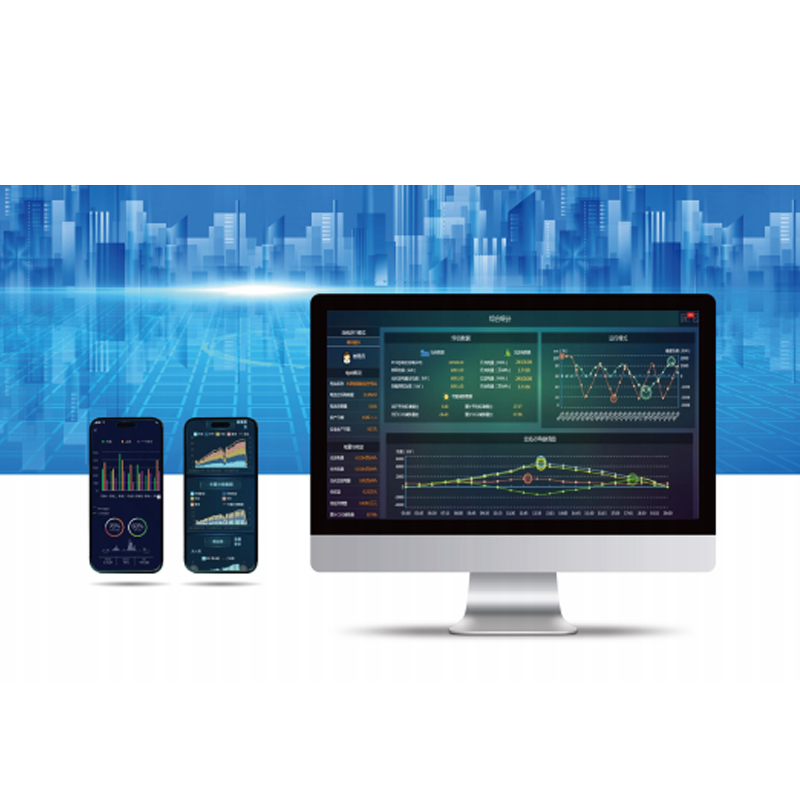
The ACDC Energy Management System (Ems) is one of those products that looks quiet on a rack, yet it’s orchestrating a small symphony behind the scenes. Developed around standard power distribution specs and built for low-voltage environments, it’s surprisingly robust—professional-grade automation, simple UI, and honestly, the kind of reliability ops teams gossip about in a good way.
Why this matters now
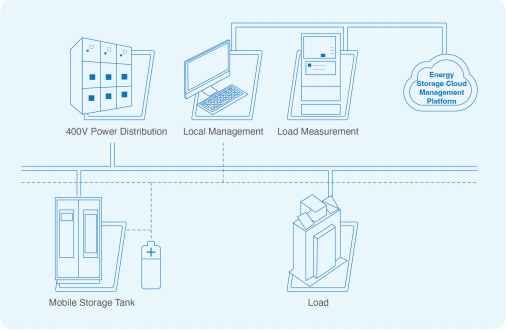
Three trends keep coming up in my conversations with facility managers: distributed energy (PV + storage), demand charges that sting, and corporate decarbonization targets. ACDC’s Ems slots into that Venn diagram—coordinating solar, batteries, gensets, and loads, while playing nice with utility signals and building systems. It’s not flashy; it’s just effective.
What it does, in real sites
- Peak shaving and TOU arbitrage with model-predictive dispatch.
- PV smoothing, curtailment, and ramp-rate control to protect inverters.
- Microgrid modes: grid-following, grid-forming (with supported inverters), black start sequencing.
- EV charging coordination—avoids transformer overloads, which is a bigger deal than people think.
- Demand response API hooks (OpenADR-like workflows) and utility set-point following.
Under the hood: process, parts, and proof
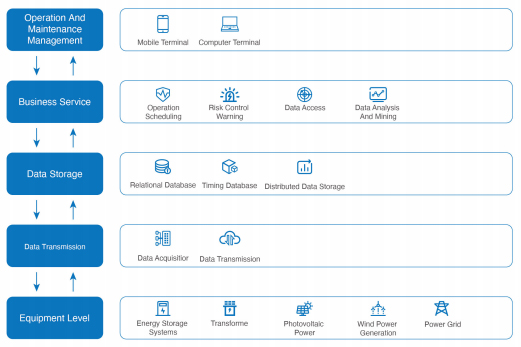
Ems hardware uses industrial-grade CPUs, conformal-coated PCBs, and an aluminum DIN-rail chassis. The software stack leans on IEC 61850/Modbus/TCP/IP, with hardened comms and role-based access. The control layer blends MPC, droop control for fast power sharing, and SOC balancing for battery life extension.
Process flow: site data capture → digital model build (single-line + constraints) → FAT (hardware-in-the-loop) → SAT/commissioning → performance tuning → remote monitoring. Testing references include IEC 61000-6-2/6-4 EMC, IEC 62368-1 safety; cybersecurity aligns to ISO/IEC 27001 playbooks. Service life is typically 10–15 years, with MTBF targets ≥100,000 h for the controller in normal ambient.
Key specs (typical)
| Parameter | Value (≈, real-world may vary) |
|---|---|
| Control cycle latency | ≤100 ms grid-tied; ≤20 ms microgrid fast loop |
| I/O & Protocols | Modbus TCP/RTU, IEC 61850 MMS, DNP3, OPC UA |
| Forecasting | PV/load forecasting MAPE ≈ 5–10% (24h) |
| Data retention | Up to 5 years local + cloud options |
| Certifications | CE, RoHS; designed to IEC 61000/62368; UL 508A panel integration |
| Operating temp | -20 to 55°C (derating above 45°C) |
Vendor landscape (my shorthand)
| Vendor | Strengths | Trade-offs |
|---|---|---|
| ACDC Ems | Fast deployment, deep low-voltage focus, flexible protocols | Niche feature set vs. very large enterprise suites |
| Schneider (EcoStruxure) | Broad ecosystem, enterprise integrations | Cost and complexity can creep |
| Siemens (SIESTORAGE/Desigo) | Industrial depth, utility-grade options | Longer lead times, more prescriptive |
Customization and deployment
From Suzhou (No. 58 Tongxin Road, Tongan town, Jiangsu, 215000), ACDC ships tailored builds: battery vendor-agnostic mappings, site-specific setpoints, and custom dashboards. Typical lead time is 4–8 weeks including FAT. Many customers say the web UI is “plain but clear,” which I take as praise.
Proof points and quick case notes
- Commercial building, 2 MW load + 1 MWh storage: demand charge cut ≈ 18%, payback ~3.2 years.
- EV hub, 1.5 MW chargers + 800 kW PV: avoided transformer trips; peak demand down ≈ 22%.
- Factory microgrid, 600 kW PV + 1.2 MWh: seamless islanding during two utility faults; no safety incidents.
Bench testing yielded setpoint tracking error under 1.5% (10-second window) and curtailment response under 300 ms. To be honest, I’ve seen flashier dashboards elsewhere, but the control response here is solid.
Who should consider it
Data centers (edge), EV fleets, light-industry plants, hospitals, and campuses that need deterministic control rather than just pretty energy charts. If your ops team values predictable behavior, Ems is a tidy fit.
Standards and references
- ISO 50001: Energy Management Systems — Requirements with guidance.
- IEC 61000-6-2/6-4: Electromagnetic compatibility (EMC) — Immunity/Emission for industrial environments.
- IEEE 1547-2018: Interconnection and interoperability of distributed energy resources.
- IEC 62368-1: Audio/video, IT and communication technology equipment — Safety requirements.
- UL 508A: Industrial Control Panels — Construction and safety.
-
Cedar Point EV Charging Solutions for Sustainable Tourism Experience
NewsApr.16,2026
-
Guide to Cedar Point Charging Stations for EV Park Visitors
NewsApr.16,2026
-
Acorn Stairlift Charging Point Guide for Home Mobility Optimization
NewsApr.16,2026
-
Integrating a Wireless Charging Point into Modern Infrastructure
NewsApr.16,2026
-
How to Optimize Your iPhone 14 Charging Point for Efficiency
NewsApr.16,2026
-
Analyzing the Charging Point Share Price Trends and Market Outlook
NewsApr.09,2026