


Oct . 20, 2025 11:10 Back to list
Energy Management System: Real-Time EMS, OEM, Cost Savings
Why an energy management system is quietly reshaping the grid
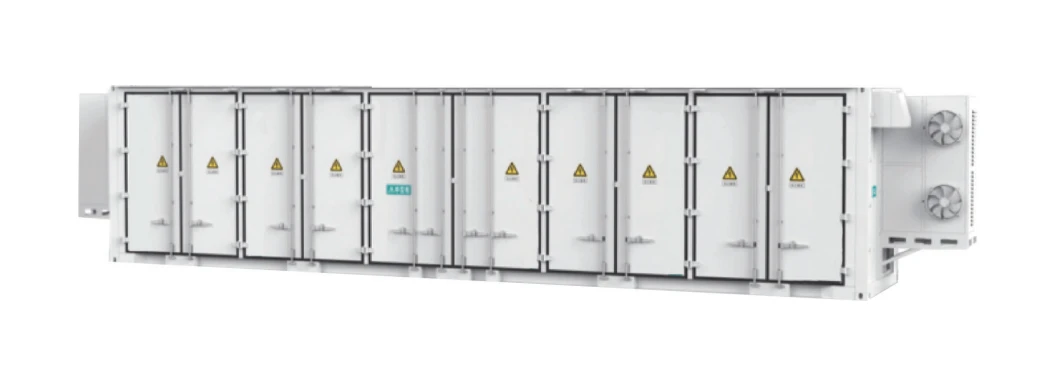
The grid is getting more complicated—PV at noon, EVs after work, factories running 24/7. To be honest, schedules don’t match generation anymore. That’s where a containerized, centralized storage platform steps in. ACDC’s Centralized Energy Storage System (made in Suzhou, Jiangsu, at No. 58 Tongxin Road, Tongan town, 215000) has been turning heads because it marries bankable LFP cells with a pragmatic control stack: power conversion, BMS, thermal, environmental, fire, lighting, and grounding… all in one. It feels engineered by people who’ve actually spent nights on commissioning calls.
Key specs at a glance
ACDC uses China first-line 280Ah LFP cells rated for ≈8,000 cycles. Single-container capacity spans 2.67–7.53 MWh (20HC/30HC/40HC), flexible for C&I peak shaving, utility time-shift, microgrids, and DC-coupled solar.
| Container options | 20HC / 30HC / 40HC |
| Usable capacity (single container) | ≈2.67–7.53 MWh (real-world use may vary) |
| Cell | LFP, 280Ah, laser-welded modules |
| Cycle life | Up to 8,000 cycles @ 25°C, 80% DoD |
| Round-trip efficiency | ≈92–95% (system-level) |
| PCS power | Configurable; grid-forming option available |
| Protection & safety | BMS (cell/module/rack), EMS, fire suppression, HVAC, environmental control |
| Comms & control | Modbus TCP, IEC 61850, SCADA APIs; fast FFR/DROOP support |
| Standards (typical) | IEC 62619, UN38.3, UL 9540A testing, NFPA 855 guidance |
Process flow, materials, and testing
Materials: tier-1 280Ah LFP prismatic cells in steel frames; nickel busbars; flame-retardant cabling; coated steel container. Methods: robotic cell sorting, laser welding, torque-controlled busbar assembly, PCS integration, and EMC-grounding. Testing: cell-level OCV sorting; module/rack OOS checks; full-container FAT with RTE, SOC/SOH calibration; thermal runaway propagation testing per UL 9540A; safety per IEC 62619; transport per UN38.3; EMI per IEC 61000. Service life: designed for ≈8,000 cycles; typical field life 10–15 years depending on DoD and temperature. Industries: manufacturing parks, data centers, ports, campuses, utility peakers, and solar-plus-storage sites.
Where a energy management system earns its keep
- C&I peak shaving and demand charge reduction
- Renewables smoothing, ramp control, and curtailment recovery
- Microgrids: black start, islanding, grid-forming
- EV fast-charging hubs: load leveling and tariff optimization
Advantages I keep hearing from operators: predictable safety envelope, quick commissioning, and honest telemetry. Many customers say the energy management system UI makes day-2 operations less of a guessing game.
Vendor landscape (high-level)
| Vendor | Cell & Capacity | Container sizes | Certs (indicative) | Notes |
| ACDC Centralized ESS | LFP 280Ah; ≈2.67–7.53 MWh | 20HC/30HC/40HC | IEC 62619, UN38.3, UL 9540A | Integrated HVAC/fire; EMS/SCADA-ready |
| Vendor A (Tier-1) | LFP/NMC; ≈2–6 MWh | 20/40 ft | UL 9540/9540A, IEC | Strong global service network |
| Vendor B (Regional) | LFP; ≈1–4 MWh | 20/40 ft | Varies by market | Cost-focused; fewer grid codes |
Customization and grid codes
Options include PCS kVA sizing, HVAC tonnage for hot/cold climates, SCADA protocols, utility telemetry, and compliance packs (IEEE 1547/2030.5, ENTSO‑E, G99). Factory settings for FFR, frequency-watt, volt-var, and black-start are available—handy when your energy management system has to play nicely with legacy assets.
Field note: a quick case
A 20 MW / 40 MWh industrial park installation used two 40HC units for peak shaving and PV time-shift. Commissioning measured RTE ≈93.2% at 0.5C, response time <120 ms on frequency events, and cabinet delta-T kept within 8°C in July heat. Feedback was refreshingly candid: “It just works, and the alarms aren’t noisy.”
Notes: Data above reflects typical configurations; site design, ambient conditions, and duty cycle influence results.
Authoritative references
- IEC 62619: Secondary lithium cells and batteries for industrial applications.
- UL 9540A: Test Method for Evaluating Thermal Runaway Fire Propagation in Battery Energy Storage Systems.
- NFPA 855: Standard for the Installation of Stationary Energy Storage Systems.
- IEA – Grid-scale storage tracking and market outlook (latest edition).
-
Cedar Point EV Charging Solutions for Sustainable Tourism Experience
NewsApr.16,2026
-
Guide to Cedar Point Charging Stations for EV Park Visitors
NewsApr.16,2026
-
Acorn Stairlift Charging Point Guide for Home Mobility Optimization
NewsApr.16,2026
-
Integrating a Wireless Charging Point into Modern Infrastructure
NewsApr.16,2026
-
How to Optimize Your iPhone 14 Charging Point for Efficiency
NewsApr.16,2026
-
Analyzing the Charging Point Share Price Trends and Market Outlook
NewsApr.09,2026