


Oct . 27, 2025 11:10 Back to list
Energy Management System | Real-Time Insights & OEM Options
Why a modern Energy Management System needs containerized storage to really shine
If you work in power, you’ve felt it: volatility, curtailment, tariffs that yo-yo by the minute. To be honest, the fixes aren’t just software dashboards anymore. You need storage that talks fluently with your control layer—so the Energy Management System doesn’t just monitor, it orchestrates.
Trend check
Three things customers keep telling me: fast grid services are hot again, demand charges are biting harder, and interconnection queues are… let’s say not getting shorter. Containerized ESS paired with a capable Energy Management System lets sites arbitrage, provide frequency response, and buffer EV fast charging without adding headache. Interestingly, vendors are nudging toward higher energy density and safer chemistries with improved thermal envelopes.
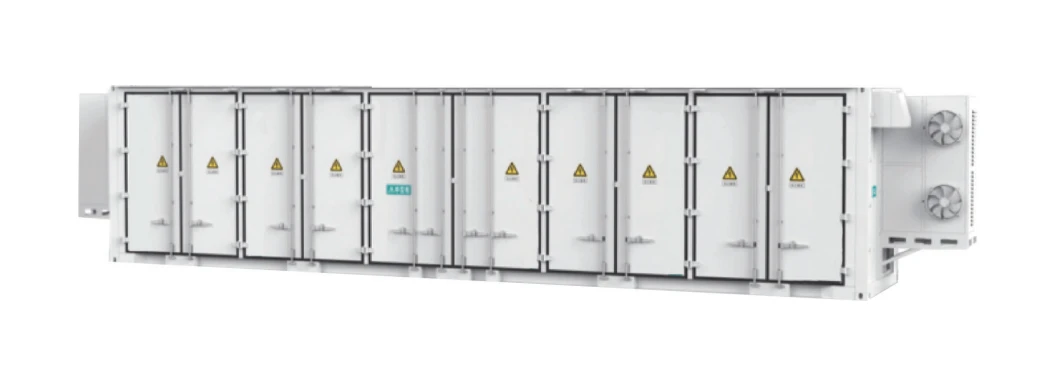
Featured hardware: Centralized energy storage system (EMS-ready)
Origin: No. 58 Tongxin Road, Tongan town, Suzhou, Jiangsu province, 215000. Uses China first‑line 280Ah brand cells with up to 8,000 cycles. Integrates power electronics, BMS, temperature and environmental control, fire protection, lighting, and grounding in one container. Sizes: 20HC, 30HC, 40HC; ≈2.67–7.53 MWh per container.
| Spec | Typical Value (real-world may vary) |
|---|---|
| Cell/Module | 280Ah LFP, rack-based |
| Container Capacity | ≈2.67–7.53 MWh (20/30/40HC) |
| Cycle Life | Up to 8,000 cycles @ 25°C, 80% DoD |
| Round-Trip Efficiency | ≈88–92% @ 0.5C |
| EMS Protocols | Modbus TCP, IEC 61850, DNP3 (via gateway) |
| Safety/Fire | Integrated detection & suppression; UL 9540A-tested design |
| Ambient Range | -20–50°C (with HVAC), site design dependent |
| Service Life | ≈10–15 years with proper O&M |
Process flow, methods, and testing
- Materials: 280Ah LFP cells, flame-retardant cable, coated steel container, HVAC, DC combiner, PCS-ready bus.
- Methods: Rack assembly → BMS mapping → HV stringing → Factory Acceptance Test (48–72h burn-in) → UL 9540A thermal propagation testing (design level) → Site SAT.
- Testing standards: IEC 62619 (cells), IEC 62933 (system), UN 38.3 (transport), UL 9540/9540A (system/fire), IEC 61000-6 (EMC).
- Sample test data: 40HC unit at 25°C delivered 91.2% RTE @0.5C; capacity fade ≈6.5% after 3,000 cycles (lab profile). Actual fleets differ.
- Industries: C&I manufacturing, data centers, renewables + storage, ports, and municipal microgrids.
Where a Energy Management System earns its keep
- Peak shaving/demand charge management (seen 12–25% bill reduction, tariff-dependent).
- PV smoothing and time-shift; curtailment capture.
- Fast-frequency response and spinning reserve (with proper interconnection).
- EV fast-charging buffer to avoid upstream upgrades.
- Islanded microgrids with black-start pathways.
Vendor snapshot (indicative)
| Vendor/System | Capacity per Container | Cycle Life | Certifications | EMS Integration |
|---|---|---|---|---|
| ACDC Centralized ESS | ≈2.67–7.53 MWh | Up to 8,000 | IEC 62619, UL 9540A, UN 38.3 | Modbus, IEC 61850 |
| Tesla Megapack (typical) | ≈3.9–4.9 MWh | ≈6,000–7,500 | UL 9540/9540A, IEC 62933 | Proprietary + protocols |
| CATL EnerOne/EnerC | ≈3–6 MWh | Up to ≈10,000 | IEC 62619, UL 9540A | Standard protocols |
Customization that matters
Options include PCS sizing, HVAC tonnage for hot sites, enclosure coatings for coastal air, and SCADA tags mapped to your Energy Management System. Many customers ask for demand-response API hooks and cyber baselines (user roles, syslog, TLS). Reasonable asks.
Field notes and feedback
A Jiangsu manufacturing microgrid (5 MW/10 MWh) reported ≈13% peak reduction in Q2 after EMS tuning; another site buffering six 300 kW chargers cut upstream max draw by ≈1.2 MW. Users like the quiet HVAC profile; one gripe was conservative SoC windows on day one—fixed via EMS policy tweaks.
Compliance and quality
- Certs/standards: IEC 62619, IEC 62933, UL 9540/9540A, UN 38.3, ISO 9001/14001 at plant level.
- Interconnection: IEEE 1547 alignment via PCS; ensure utility witness testing.
- Documentation pack: safety case, FMEA summary, FAT/SAT reports, EMS point list (CSV).
Citations
- IEC 62619: Secondary lithium cells and batteries for industrial applications.
- UL 9540A: Test Method for Evaluating Thermal Runaway Fire Propagation.
- IEC 62933 series: Electrical energy storage (EES) systems.
- IEEE 1547-2018: Interconnection and interoperability of DER with associated electric power systems.
- UN 38.3: Lithium battery transport testing requirements.
-
Cedar Point EV Charging Solutions for Sustainable Tourism Experience
NewsApr.16,2026
-
Guide to Cedar Point Charging Stations for EV Park Visitors
NewsApr.16,2026
-
Acorn Stairlift Charging Point Guide for Home Mobility Optimization
NewsApr.16,2026
-
Integrating a Wireless Charging Point into Modern Infrastructure
NewsApr.16,2026
-
How to Optimize Your iPhone 14 Charging Point for Efficiency
NewsApr.16,2026
-
Analyzing the Charging Point Share Price Trends and Market Outlook
NewsApr.09,2026