


Oct . 21, 2025 11:05 Back to list
Energy Storage Cabinet — Safe, Scalable, Smart EMS Control
Field Notes on the Modern Energy Storage Cabinet
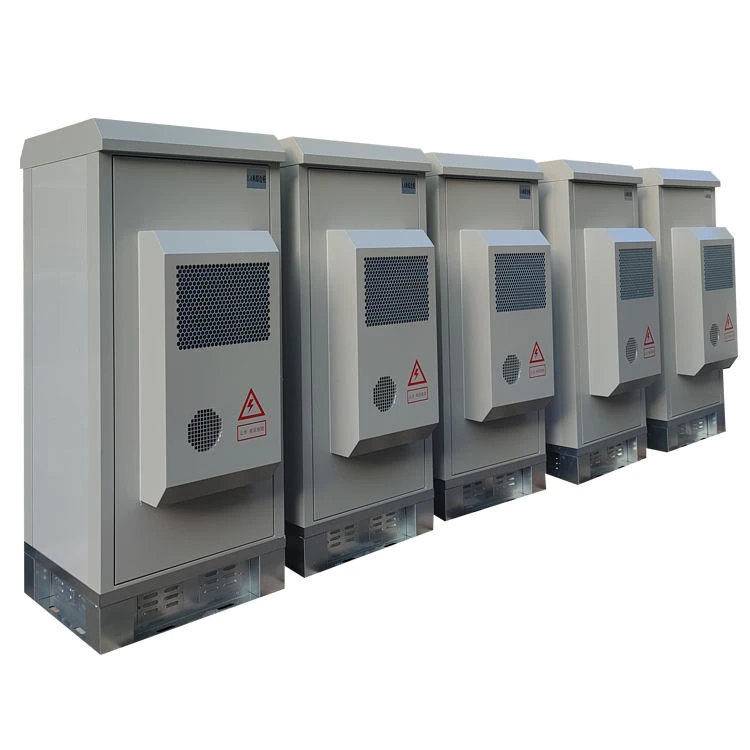
If you’ve stood next to a humming 5G base station in August heat, you already know: storage that can’t manage temperature won’t last. The Outdoor Integrated Temperature Control Cabinet from Suzhou (origin: No. 58 Tongxin Road, Tongan town, Suzhou!Jiangsu province,215000) is one of those quietly engineered boxes that keeps batteries and power electronics alive in the real world—dust, rain, salt, and all. It serves wireless base stations, access/transmission nodes, and emergency comms. Not glamorous, but essential.
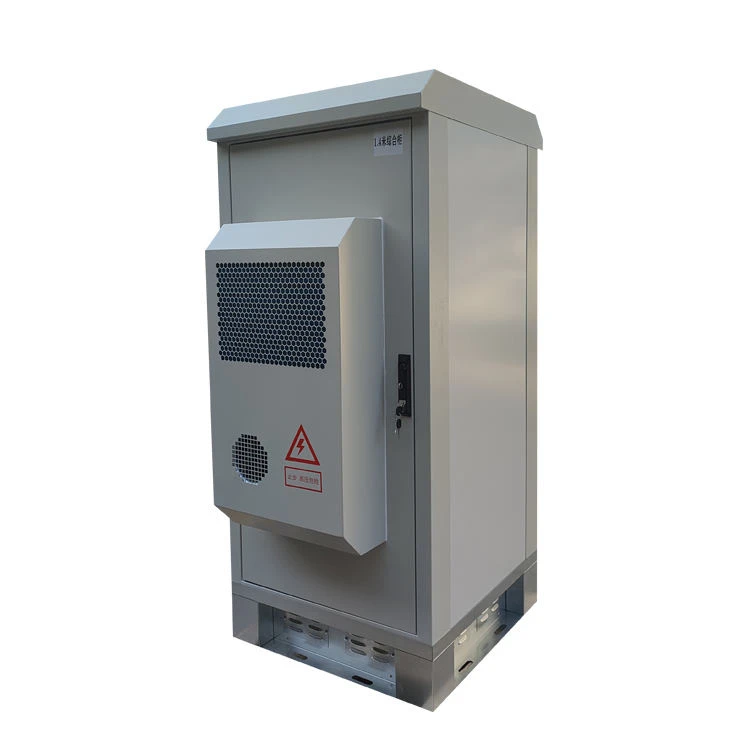
Why temperature control matters (more than you think)
Thermal stress shortens cell life, nudges BMS limits, and—worst case—pushes toward thermal runaway. In telecom enclosures, daytime solar gain plus night condensation is the classic one-two punch. That’s why this Energy Storage Cabinet integrates active cooling, heating, airflow guidance, and condensation management. To be honest, most field failures I’ve seen weren’t about “bad cells”—they were about unmanaged heat cycles and moisture.
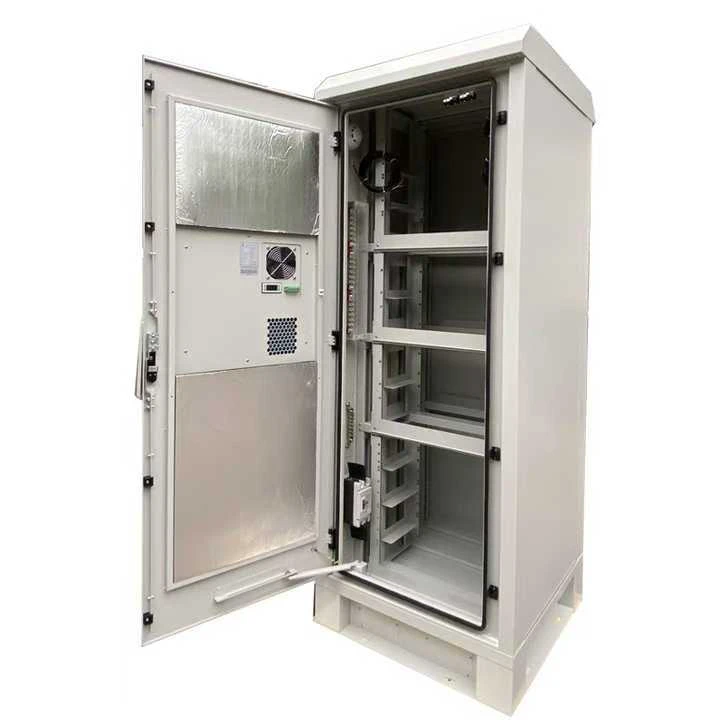
Typical specifications (real-world use may vary)
| Parameter | Typical Value |
|---|---|
| Enclosure rating | IP55–IP65 (IEC 60529) ≈ |
| Thermal system | DC air-conditioner + PTC heater; humidity control; filtered positive pressure (optional) |
| Ambient range | -20°C to +55°C (configurable up to +60°C) |
| Materials | Galvanized steel or Al-Zn steel, polyurethane insulation, powder coat (C3–C4, ISO 12944) |
| Battery bay | For LiFePO₄ strings or 19” rack modules; 5–100 kWh system builds ≈ |
| Noise | ≤ 60 dB(A) @1 m ≈ |
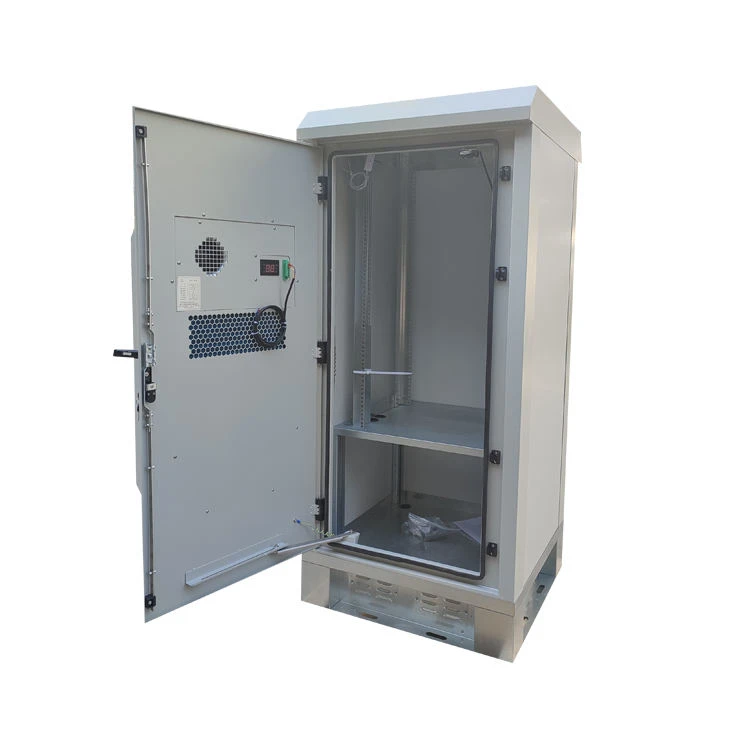
How it’s built (quick process flow)
Materials: galvanized steel sheet; stainless hardware; closed-cell gaskets; hydrophobic filters; halogen-free wiring. Methods: CNC laser cutting, bending, argon arc welding; phosphate pretreatment; 70–90 μm powder coat; door seam sealing. Testing: IP spray (IEC 60529), salt-spray (ISO 9227), thermal soak and cycle (ETSI EN 300 019), insulation resistance (IEC 61439), and, where batteries are integrated, cell/module compliance per IEC 62619/UL 1973; fire behavior validated against UL 9540A at the system level when applicable. Service life: enclosure 10–15 years; fan MTBF ≈ 50,000–80,000 h; AC compressor 6–8 years depending on duty.
Where it’s used
5G/4G base stations, microwave backhaul huts, roadside cabinets, small edge data rooms, oil & gas well pads, rail signaling, and emergency comms trailers. Many customers say the sealed design cuts dust-related maintenance by “half or more,” which tracks with what I’ve seen in desert sites.
| Vendor | IP Rating | Thermal Method | Certs (typ.) | Lead Time | Notes |
|---|---|---|---|---|---|
| ACDCBESS (Suzhou) | IP55–65 | DC AC + PTC; dehumid. | CE, RoHS; IEC/UL alignment | ≈ 4–8 weeks | Flexible customization; telecom-focused |
| Vendor A | IP54 | Fan + heat exchanger | CE | ≈ 6–10 weeks | Lower cost; less thermal headroom |
| Vendor B | IP66 | Industrial AC + purge | CE, UL (select models) | ≈ 8–12 weeks | Harsh environments; premium price |
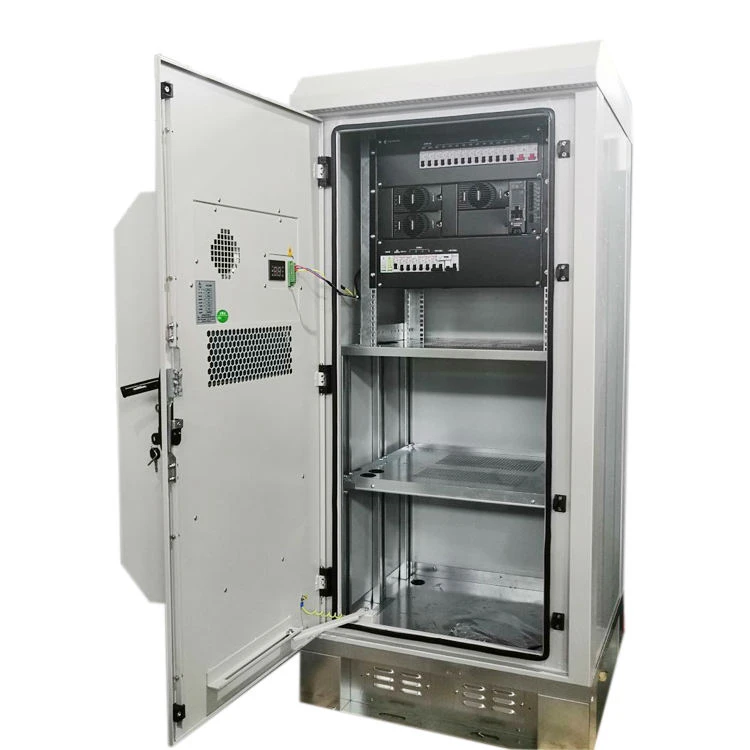
Customization that actually helps
Options include LiFePO₄ rack formats, BMS/EMS wiring looms, fire suppression (aerosol or clean agent), dual-redundant ACs, remote monitoring (SNMP/Modbus), anti-condensation heaters, explosion-proof vents, and solar shields. For grid-limited sites, I’d add a high-SEER DC aircon; it pays back faster than people expect.
Field data and feedback
- Cooling EER: ≈ 2.8–3.2 under 35°C ambient (site logs, mixed climates).
- Battery bay delta-T: ≤ 5–8°C across racks when baffles are installed.
- Customer note: “Humidity alarms dropped by ~60% after cabinet swap.”
Certifications/standards referenced: IEC 62619/UL 1973 for batteries, UL 9540A for fire propagation testing at system level, IEC 60529 for IP, IEC 61439 for assemblies, ETSI EN 300 019 for environmental categories, and NFPA 855 for installation guidance.
Mini case snippets
- Coastal 5G hub, Vietnam: IP65 build with C4 coating; salt-mist corrosion down noticeably after 9 months.
- High-altitude relay, Xinjiang: heater-led start-up kept packs at ≥ 10°C; zero cold-induced BMS trips last winter.
- Roadside micro-edge, EU: dual ACs with lead/lag; 14% energy savings via setpoint tuning and night-flush.
It seems the best Energy Storage Cabinet is the one you never notice—because uptime is boring. And boring is good.
References
- IEC 60529: Degrees of protection (IP Code)
- IEC 61439-1/2: Low-voltage switchgear and controlgear assemblies
- IEC 62619: Safety requirements for secondary lithium cells and batteries
- UL 1973: Batteries for stationary applications
- UL 9540A: Thermal runaway propagation test
- ETSI EN 300 019: Environmental conditions
- ISO 12944: Corrosion protection of steel structures
- NFPA 855: Installation of stationary energy storage systems
-
Cedar Point EV Charging Solutions for Sustainable Tourism Experience
NewsApr.16,2026
-
Guide to Cedar Point Charging Stations for EV Park Visitors
NewsApr.16,2026
-
Acorn Stairlift Charging Point Guide for Home Mobility Optimization
NewsApr.16,2026
-
Integrating a Wireless Charging Point into Modern Infrastructure
NewsApr.16,2026
-
How to Optimize Your iPhone 14 Charging Point for Efficiency
NewsApr.16,2026
-
Analyzing the Charging Point Share Price Trends and Market Outlook
NewsApr.09,2026