

Mar . 19, 2026 01:55 Back to list
Understanding Home Power Supply Options AC or DC for Optimal Efficiency
Choosing the Right Home Power Supply: AC or DC
Selecting the appropriate power source for your home – AC (Alternating Current) or DC (Direct Current) – is crucial for efficiency, safety, and compatibility with your appliances. While AC power is the standard for most homes, DC power is gaining traction, especially with the rise of renewable energy sources and battery storage systems. This article explores the differences between AC and DC power, their respective advantages and disadvantages, and guides you toward making the best choice for your specific needs. Understanding these distinctions will help you optimize your home’s energy setup.
Understanding AC and DC Power
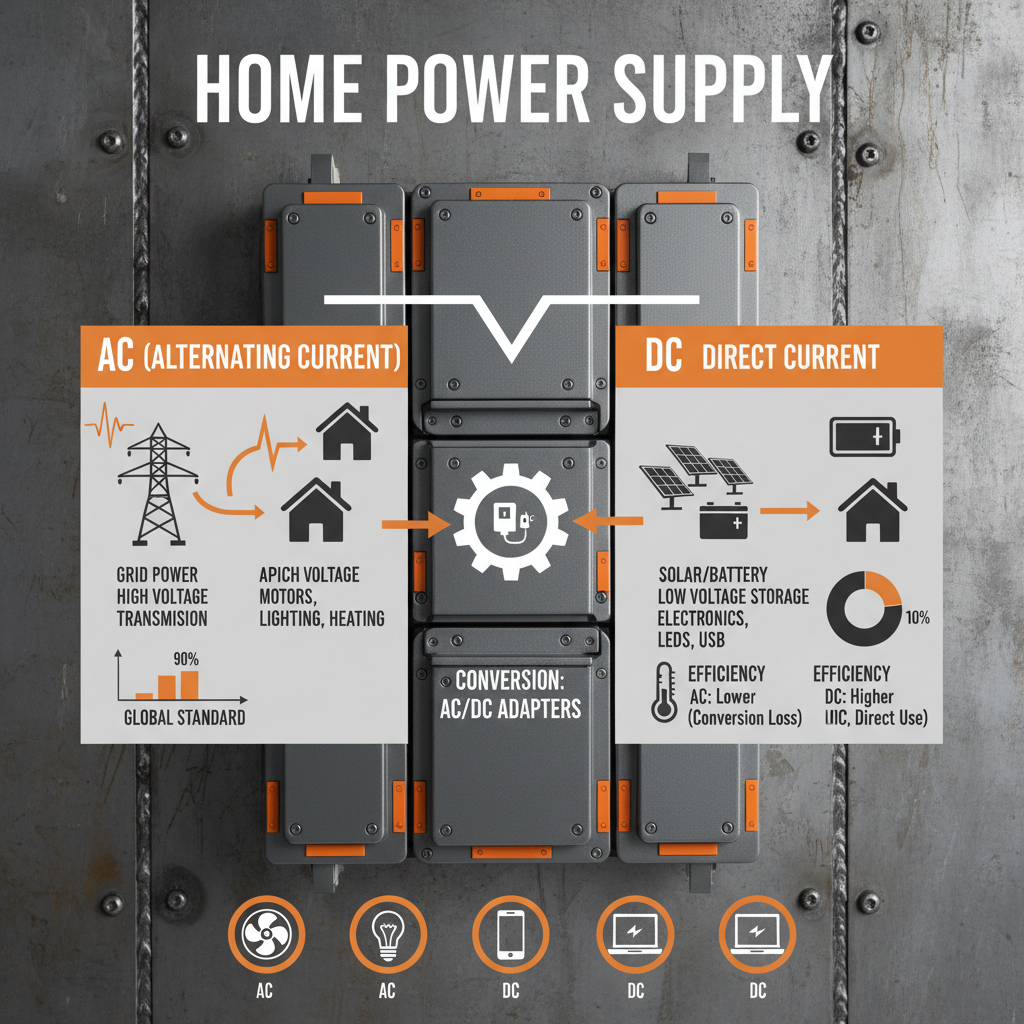
AC power, the type delivered by your utility company, constantly changes direction. This alternating flow allows for efficient long-distance transmission with minimal power loss, hence its widespread use in the power grid. Most household appliances are designed to run on AC power. DC power, on the other hand, flows in one direction only. This is the type of power produced by batteries, solar panels, and many electronic devices. While DC power transmission over long distances is less efficient, it’s becoming increasingly relevant with advances in power electronics and energy storage. ACDCBESS provides solutions for both AC and DC power systems.
Key Takeaway: AC is best for long-distance transmission, while DC is ideal for energy storage and powering electronic devices.
Advantages and Disadvantages of AC Power
Advantages of AC Power: Efficient long-distance transmission, compatibility with a wide range of appliances, and ease of voltage transformation using transformers. The established infrastructure makes it readily available. Disadvantages of AC Power: Energy loss due to reactance, potential for skin effect at high frequencies, and less suitable for direct storage in batteries without conversion. AC power supplies from ACDC BESS are designed for reliability.
AC Power – Key Benefits:
• Long-distance transmission efficiency
• Wide appliance compatibility
• Voltage transformation ease
Advantages and Disadvantages of DC Power
Advantages of DC Power: Highly efficient for powering electronic devices, ideal for energy storage in batteries, and more suitable for renewable energy sources like solar panels. DC power minimizes energy loss in battery charging and discharging. Disadvantages of DC Power: Less efficient for long-distance transmission, requires voltage conversion for many appliances, and limited availability compared to AC power. However, DC microgrids are becoming increasingly popular.
Home Power Solutions: AC, DC, and Hybrid Systems
Most homes currently operate entirely on AC power. However, the increasing adoption of solar panels, battery storage, and DC appliances is driving a shift towards hybrid systems. A hybrid system combines the benefits of both AC and DC power. Solar panels generate DC power, which can be stored in batteries (also DC) or converted to AC power for use in standard appliances. ACDCBESS specializes in designing and implementing these sophisticated energy solutions.
Choosing the Right System for Your Home
The best choice depends on your energy needs, budget, and sustainability goals. If you primarily rely on grid power and have standard appliances, AC power is likely sufficient. However, if you're investing in solar panels and battery storage, a hybrid AC/DC system will maximize efficiency and reduce your carbon footprint. Consider the long-term cost savings and environmental benefits when making your decision. Contact ACDCBESS for a personalized consultation.
Conclusion: Powering Your Future with Informed Choices
Understanding the differences between AC and DC power is essential for creating a sustainable and efficient home energy system. Whether you opt for a traditional AC setup, a modern DC system, or a hybrid approach, ACDC BESS offers the expertise and solutions to meet your unique needs. Embrace the future of energy and power your home intelligently.
Frequently Asked Questions (FAQs)
Can I convert AC appliances to run on DC power?
Yes, you can use an inverter to convert DC power from batteries or solar panels to AC power for use with standard AC appliances. However, this conversion process introduces some energy loss, typically around 5-10%. For appliances that run on low voltages (like USB-powered devices), you can use DC-to-DC converters directly. Consider the efficiency loss when choosing between AC and DC appliances for a DC-based system. Using DC appliances directly is the most efficient option.
What are the benefits of a DC microgrid?
A DC microgrid offers several advantages, including increased efficiency, improved reliability, and simplified integration of renewable energy sources. By distributing DC power locally, you minimize energy conversion losses and reduce dependence on the central grid. DC microgrids are particularly well-suited for areas with high renewable energy penetration and remote locations where grid access is limited. ACDCBESS offers complete DC microgrid solutions.
Is DC power safer than AC power?
While both AC and DC power can be dangerous, DC power is generally considered less hazardous in certain respects. The frequency of AC power can cause muscle contractions, making it more difficult to let go of a live wire. DC power doesn't have this effect, but it can still cause severe burns and other injuries. Safe handling practices are crucial for both AC and DC electrical systems. Always consult a qualified electrician for any electrical work.
What is the role of batteries in a DC power system?
Batteries play a critical role in DC power systems by providing energy storage. They store excess DC power generated by solar panels or other sources for use when demand exceeds supply. Batteries allow you to achieve greater energy independence, reduce reliance on the grid, and provide backup power during outages. The type of battery (e.g., lithium-ion, lead-acid) will impact performance, lifespan, and cost.
-
Cedar Point EV Charging Solutions for Sustainable Tourism Experience
NewsApr.16,2026
-
Guide to Cedar Point Charging Stations for EV Park Visitors
NewsApr.16,2026
-
Acorn Stairlift Charging Point Guide for Home Mobility Optimization
NewsApr.16,2026
-
Integrating a Wireless Charging Point into Modern Infrastructure
NewsApr.16,2026
-
How to Optimize Your iPhone 14 Charging Point for Efficiency
NewsApr.16,2026
-
Analyzing the Charging Point Share Price Trends and Market Outlook
NewsApr.09,2026