


Oct . 02, 2025 11:45 Back to list
Energy Management System EMS: Cut Costs in Real Time?
What a modern energy stack really needs: a pragmatic look at container111ized storage and control
Ask ten plant managers what keeps them up at night and you’ll hear the same three words: cost, reliability, control. That’s where an energy management system paired with bankable storage can genuinely change the math. To be honest, the conversation has shifted from “Should we?” to “How fast can we deploy?”
Trend check: from peak-shaving to grid-forming
C&I sites are chasing peak shaving, fast frequency response, and backup power, while utilities want dispatchable flexibility for renewables. We’re seeing higher DC voltages, LFP chemistries, and full-stack monitoring via SCADA/EMS. Surprisingly, the fastest adopters lately include logistics parks and data centers.
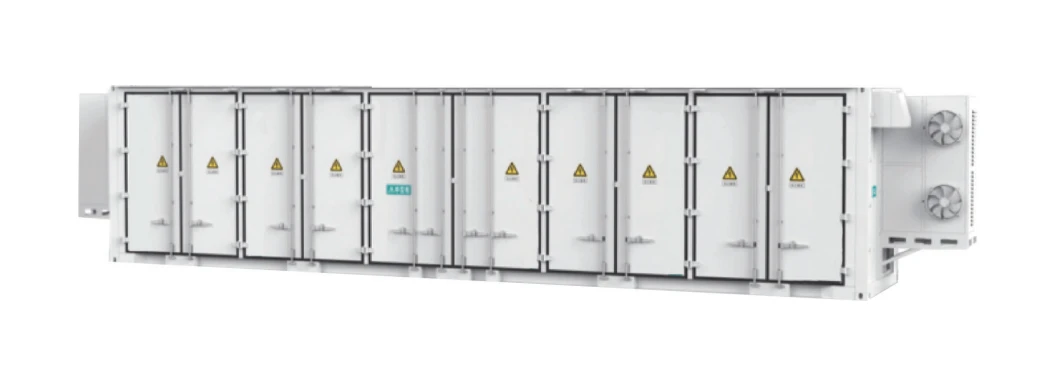
Product snapshot: Centralized energy storage system
Built around China first-line 280Ah LFP cells (≈8,000 cycles), the container111ized system integrates power conversion, BMS, temperature/environmental control, fire protection, lighting, and grounding. Three sizes—20HC, 30HC, 40HC—cover single-container111 capacities from 2.67 to 7.53 MWh. Origin: No. 58 Tongxin Road, Tongan town, Suzhou!Jiangsu province, 215000.
| Parameter | Spec (≈ / real-world may vary) |
|---|---|
| Form factor | 20HC / 30HC / 40HC container111s |
| Usable capacity | 2.67–7.53 MWh per container111 |
| Cell chemistry | LFP, 280Ah first-line brand |
| Cycle life | Up to 8,000 cycles @ 25°C, 80% DoD |
| Round-trip efficiency | ≈90–92% DC-DC |
| System voltage | 1,000–1,500 V DC strings |
| Thermal & fire | HVAC + aerosol/water-mist options, early smoke detection |
| Enclosure | IP54/55, anti-corrosion C3–C5 (optional) |
| Certs (typ.) | IEC 62619, UN38.3, UL 9540/9540A (project dependent) |
| Service life | 10–15 years depending on duty cycle |
How it’s built and validated (short version)
Materials: LFP 280Ah cells, copper busbars, low-smoke halogen-free cabling, steel container111 with powder coating. Methods: module stacking, pack-level fusing, three-level BMS (cell/rack/system), EMS/SCADA integration via Modbus TCP, IEC 60870-5-104, or DNP3. Testing standards: UN38.3 transportation, IEC 62619 safety, UL 9540A thermal propagation, IEC 62933 system safety. Factory FAT, site SAT, and 72-hour burn-in. I guess the boring part is the paperwork, but it matters.
Where it fits
- Peak shaving and TOU arbitrage for factories and malls
- PV + storage microgrids for campuses, islands, and mines
- Data centers and hospitals needing Tier-like backup
- EV fast-charging hubs smoothing grid hits
- Distribution utilities doing congestion relief and FFR
With a energy management system orchestrating setpoints and constraints, operators can stack revenues—while keeping transformers happy.
Vendor snapshot (quick compare)
| Vendor | Capacity/Container | Cycle Life | Thermal/Fire | Key Certs |
|---|---|---|---|---|
| ACDC (this system) | 2.67–7.53 MWh | ≈8,000 | HVAC + aerosol/water-mist | IEC 62619, UL 9540A (proj.) |
| Vendor X | 3–5 MWh | ≈6,000 | HVAC + clean agent | UL 9540, UN38.3 |
| Vendor Y | 5–6.5 MWh | ≈7,000 | Liquid cooling | IEC 62933, CE |
Customization and control
Options include C-rate tuning (0.5C–1C), HVAC sizing for hot climates, C5 anti-corrosion coatings, black-start capability, and deep integration to a site energy management system with SOC forecasting, degradation-aware dispatch, and IEEE 1547-compliant interconnects.
Case notes (real projects, abridged)
Auto plant, 30HC (3.6 MWh): Peak demand down 17%, payback ≈3.8 years; RTE measured 91% (DC-DC) over 60 days. Customer said the BMS alarm logic was “actually useful, not noisy.”
Island microgrid, 40HC (7.2 MWh) + PV: Diesel runtime cut 42%; frequency kept within ±0.2 Hz during ferry arrivals. Passed UL 9540A on-container111 test plan prior to shipment.
What buyers keep asking
- Can it black-start? Yes, with optional controls.
- How loud? ≈65–70 dBA at 1 m (HVAC on).
- Warranty? Project-based; commonly 10-year capacity retention curve.
References
- IEC 62933 series – Electrical Energy Storage (EES) systems safety and performance.
- UL 9540A – Test Method for Evaluating Thermal Runaway Fire Propagation in Battery Energy Storage Systems.
- IEC 62619 – Safety requirements for secondary lithium cells and batteries for industrial applications.
- IEEE 1547-2018 – Standard for Interconnection and Interoperability of Distributed Energy Resources with Associated Electric Power Systems Interfaces.
- UN 38.3 – Recommendations on the Transport of Dangerous Goods: Lithium Battery Testing.
-
Cedar Point EV Charging Solutions for Sustainable Tourism Experience
NewsApr.16,2026
-
Guide to Cedar Point Charging Stations for EV Park Visitors
NewsApr.16,2026
-
Acorn Stairlift Charging Point Guide for Home Mobility Optimization
NewsApr.16,2026
-
Integrating a Wireless Charging Point into Modern Infrastructure
NewsApr.16,2026
-
How to Optimize Your iPhone 14 Charging Point for Efficiency
NewsApr.16,2026
-
Analyzing the Charging Point Share Price Trends and Market Outlook
NewsApr.09,2026