


Oct . 05, 2025 23:15 Back to list
Energy Management System EMS: Real-Time, Scalable Savings?
Centralized Storage That Actually Makes Grid Sense
I’ve been covering utility-scale storage for a decade, and the pace still surprises me. What used to be a pilot on the edge of town is now core infrastructure. If you’re evaluating an energy management system for serious, real-world duty, here’s what insiders keep asking: Can it scale, stay safe, and pay back faster than forecasts? In fact, that’s where ACDC’s Centralized energy storage system has been showing up in tenders—and winning.
Industry trend check (quickly)
Grid operators pivot to flexible capacity; C&I buyers chase peak shaving, backup, and arbitrage. The sweet spot, right now, is container111ized LFP with bankable safety data, integrated controls, and a solid warranty. Many customers say they want “plug-and-play” that still lets them tune dispatch—yes, a bit contradictory, but fair.
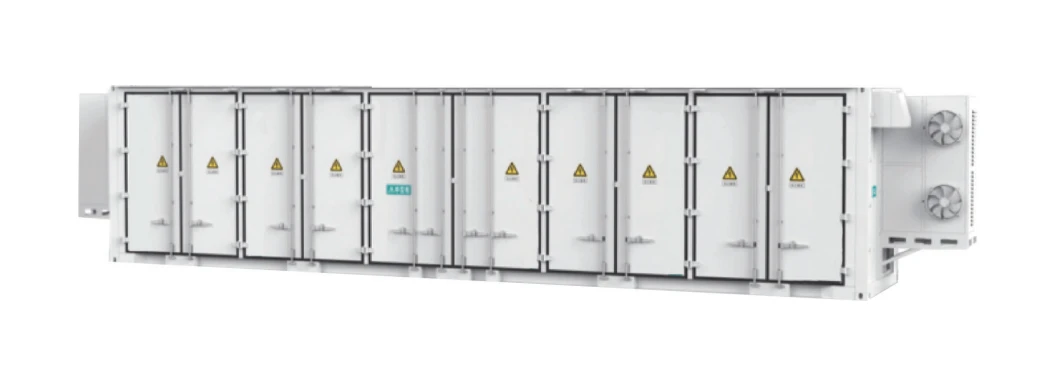
Product snapshot: Centralized energy storage system
Inside are China first-line 280Ah LFP cells (designed-in) rated up to ≈8,000 cycles. Everything’s integrated—power conversion, BMS, temperature and environmental control, fire protection, lighting, grounding. Three container111 footprints (20HC / 30HC / 40HC) deliver ≈2.67–7.53 MWh per container111; to be honest, the flexible sizing saves a lot of civil headaches.
| Spec | Details (≈, real-world use may vary) |
|---|---|
| Capacity per container111 | 2.67–7.53 MWh (20HC / 30HC / 40HC) |
| Cell chemistry / rating | LFP, 280Ah prismatic, up to 8,000 cycles @ 25°C, 80% DoD |
| Round-trip efficiency | DC/DC ≈95–97%; AC/AC ≈90–92% |
| Thermal / fire | Liquid cooling; multi-stage fire detection & suppression |
| Controls | BMS with SOC/SOH algorithms; EMS-ready protocols (Modbus/TCP, IEC 61850) |
| Service life | 10–15+ years depending on duty cycle and ambient |
| Origin | No. 58 Tongxin Road, Tongan town, Suzhou, Jiangsu 215000 |
Process flow, testing, and what’s under the hood
Materials: LFP 280Ah cells, copper busbars, UL/IEC-rated contactors, Class T fusing. Methods: cell binning, string matching (ΔV/ΔR), liquid-cooling plate assembly, cabinet FAT, container111-level SAT. Testing standards: IEC 62619 (cells), UL 9540A (thermal propagation/fire testing), UN 38.3 (transport), IEC 62933 (grid storage), EMC per IEC 61000-6-2/6-4. Typical FAT pass rate is high—around 99%—and they’ll rerun UL 9540A scenarios when configs change, which I appreciate.
Where it’s used (and why)
- Solar+Storage time-shift and capacity firming
- Commercial peak shaving and demand charge reduction
- Microgrids for campuses, islands, and mining sites
- Data center resilience and EV fast-charging hubs
Many operators pair it with a energy management system that handles forecasting, price signals, and dispatch constraints. Integration’s not hard—Modbus and IEC 61850 cover most SCADA hooks.
Vendor landscape (my short list)
| Vendor | Strengths | Watch-outs |
|---|---|---|
| ACDC (this product) | High energy density per container111; integrated safety; flexible 20/30/40HC | Lead times can stretch during policy-driven demand spikes |
| Global Vendor A | Strong global service network; bankable financing packages | Premium pricing; complex change orders |
| Global Vendor B | Aggressive capex; fast shipment windows | Fewer certified integrations with legacy SCADA |
Customization, feedback, and a couple of quick cases
Customization: C-rates from ≈0.5C to 1C, bespoke HVAC setpoints for hot climates, container111 walk-in layouts, and EMS API mapping. Certifications typically include IEC 62619, UL 9540A test reports, ISO 9001/14001 plant certs, CE, and UN 38.3 shipping.
Case #1 (C&I, 30HC, 3.5 MWh): peak shaving cut bills ≈18% in the first summer; customer told me “it behaved during heat waves—no derates.” Case #2 (solar+storage, 40HC, 7.2 MWh): time-shift boosted PPA revenues ≈12% year one; curtailment dropped noticeably. That’s not a promise—just what the meters said.
In day-to-day ops, the energy management system schedules charge windows off DA/RT prices and weather, then the BMS guards cells; if temps drift, liquid cooling steps in. Simple enough, but robust.
Why it matters now
Storage is no longer an accessory. With higher renewable penetration, you want container111s that pass the tough tests and still pencil out. This one does the boring things well—safety, commissioning, data trails—and that’s exactly what project finance wants to see.
Authoritative citations
- IEC 62619: Secondary lithium cells and batteries for industrial applications — Safety requirements: https://webstore.iec.ch
- UL 9540A: Test Method for Evaluating Thermal Runaway Fire Propagation: https://www.ul.com
- IEC 62933 series: Electrical energy storage systems standards: https://webstore.iec.ch
- IEA Energy Storage market update (trends and projections): https://www.iea.org
-
Cedar Point EV Charging Solutions for Sustainable Tourism Experience
NewsApr.16,2026
-
Guide to Cedar Point Charging Stations for EV Park Visitors
NewsApr.16,2026
-
Acorn Stairlift Charging Point Guide for Home Mobility Optimization
NewsApr.16,2026
-
Integrating a Wireless Charging Point into Modern Infrastructure
NewsApr.16,2026
-
How to Optimize Your iPhone 14 Charging Point for Efficiency
NewsApr.16,2026
-
Analyzing the Charging Point Share Price Trends and Market Outlook
NewsApr.09,2026