


Oct . 07, 2025 08:25 Back to list
Energy Management System: Real-Time, OEM-Ready EMS?
What an energy management system really looks like in 2025
If you’ve ever wondered what an energy management system looks like when it’s done properly, here’s the insider view from the field. I’ve walked more than a few hot container111s and chilly substations; the systems that survive real-world abuse tend to be the ones that integrate storage, safety, and software without drama. And yes, the gear I’m talking about today is container111ized, industrial-grade, and—surprisingly—pretty flexible.
Industry pulse
The race is on: grid operators want inertia, C&I sites want peak shaving, and data centers want uptime. Containerized storage has become the backbone of the modern energy management system because you can drop it on a pad, wire it into the plant or feeder, and get controllable capacity—fast. Most deployments I see lean toward LFP chemistries for safety and cycle life, though, to be honest, controls and thermal design often make or break performance.
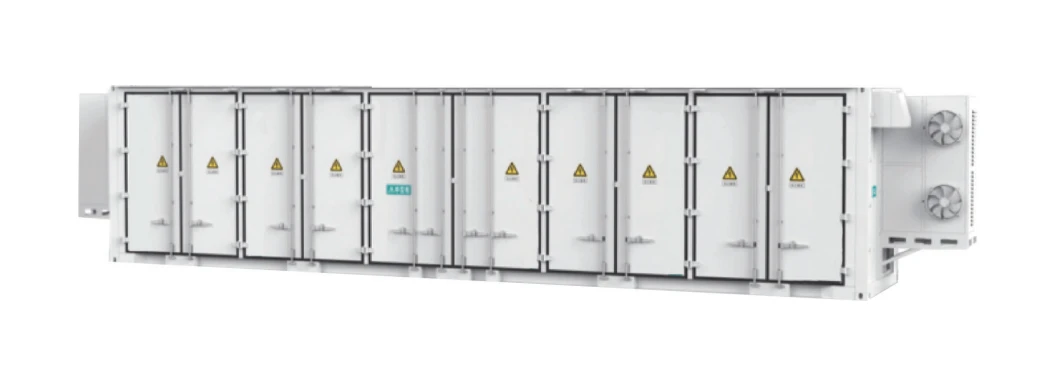
Product snapshot: Centralized energy storage system
Built in Suzhou (Origin: No. 58 Tongxin Road, Tongan town, Suzhou!Jiangsu province,215000), this container111ized system uses China first-line 280Ah cells with up to 8,000 cycles. It integrates power, BMS, temperature and environmental control, fire protection, lighting, and grounding—so you don’t play system integrator on-site. Three size classes (20HC, 30HC, 40HC) cover single-container111 capacities from 2.67MWh to 7.53MWh.
| Spec | Centralized energy storage system (approx.) |
|---|---|
| Container classes | 20HC / 30HC / 40HC |
| Energy per container111 | 2.67–7.53 MWh (configurable) |
| Cell rating | 280Ah prismatic (LFP commonly used in this class) |
| Cycle life | Up to 8,000 cycles (@ standard DoD; real-world use may vary) |
| Round-trip efficiency | ≈88–92% (system-level) |
| Safety & controls | BMS + HVAC + environmental control + integrated fire protection |
How it’s built (materials, methods, testing)
- Materials: 280Ah prismatic cells, container111ized steel enclosure, busbars, PCS, HVAC, sensors, fire suppression.
- Methods: cell sorting and matching; module/pack welding; BMS calibration; factory acceptance test (FAT); site commissioning.
- Testing standards: IEC 62619 (cell/pack safety), UL 9540/1973 (system & battery), UN 38.3 (transport), EMC to IEC 61000-series, NFPA 855 siting.
- Service life: up to 8,000 cycles; ≈10–15 years at 1 cycle/day depending on depth of discharge and ambient.
- Industries: C&I, renewable plants, microgrids, ports, data centers, EV fast-charging buffers.
Applications and advantages
Peak shaving and demand charge reduction, solar time-shift, frequency response, black start support, and backup power. The integrated design reduces on-site engineering and shortens COD timelines. Many customers say the predictable container111 form factor simplifies permitting—though local AHJ interpretations still vary, honestly.
Vendor landscape (quick take)
| Attribute | ACDC Centralized | Tesla Megapack | BYD / Sungrow (typ.) |
|---|---|---|---|
| Energy per unit | 2.67–7.53 MWh | ≈3–4 MWh | ≈2–5 MWh |
| Chemistry | LFP (class-typical) | LFP | LFP |
| Cycle life (ref.) | Up to 8,000 | ≈6,000–8,000 | ≈6,000–8,000 |
| Compliance focus | IEC 62619, UL 9540, NFPA 855 | UL 9540A/9540, NFPA 855 | IEC/UL stack, NFPA 855 |
Customization
- Power blocks matched to site transformer limits and feeder protection.
- EMS integration via Modbus TCP/IEC 61850; open APIs are a lifesaver, actually.
- Thermal setpoints for hot or high-altitude sites; enclosure options (IP54+).
Field notes (mini case studies)
- C&I peak shaving, 30HC unit: demand charges down ≈22% within first quarter; operators praised the BMS alarms as “useful, not noisy.”
- Solar-plus-storage at 40HC: improved evening dispatch; O&M team liked single-vendor responsibility—less finger pointing.
Final thought: the best energy management system doesn’t shout; it just keeps dispatching cleanly, passes audits, and lets you sleep at night.
Authoritative references
- IEC 62619: Secondary cells and batteries for industrial applications – safety requirements. https://webstore.iec.ch
- UL 9540: Energy Storage Systems and Equipment. https://www.ul.com
- NFPA 855: Standard for the Installation of Stationary Energy Storage Systems. https://www.nfpa.org
- UN 38.3: Recommendations on the Transport of Dangerous Goods – Tests and Criteria. https://unece.org
- ISO 9001: Quality management systems. https://www.iso.org
-
Cedar Point EV Charging Solutions for Sustainable Tourism Experience
NewsApr.16,2026
-
Guide to Cedar Point Charging Stations for EV Park Visitors
NewsApr.16,2026
-
Acorn Stairlift Charging Point Guide for Home Mobility Optimization
NewsApr.16,2026
-
Integrating a Wireless Charging Point into Modern Infrastructure
NewsApr.16,2026
-
How to Optimize Your iPhone 14 Charging Point for Efficiency
NewsApr.16,2026
-
Analyzing the Charging Point Share Price Trends and Market Outlook
NewsApr.09,2026