


Oct . 08, 2025 22:30 Back to list
Energy Management System: Real-Time Savings, OEM Ready?
Centralized energy storage that finally makes the grid feel manageable
If you’ve been shopping for an energy management system, you already know the market is noisy. To be honest, it’s harder than it should be to separate real engineering from brochure glitter. I recently spent time on the factory floor in Suzhou (No. 58 Tongxin Road, Tongan town, Suzhou!Jiangsu province,215000), and the difference shows when you crack open the container111 and see the layout, the busbars, the BMS harnessing—little things that add up.
What’s inside the container111 (and why it matters)
The Centralized energy storage system uses China first-line 280Ah LFP prismatic cells, rated up to ≈8,000 cycles (real-world use may vary with DoD and temperature). It integrates the power system, BMS, temperature and environmental control, fire protection, lighting, and grounding—so deployment is more “land-and-connect” than “assemble-a-puzzle.” There are 20HC, 30HC, and 40HC footprints, with a single-container111 capacity from 2.67MWh to 7.53MWh. In practice, that’s enough to do serious peak shaving, PV smoothing, and even fast-response ancillary services.
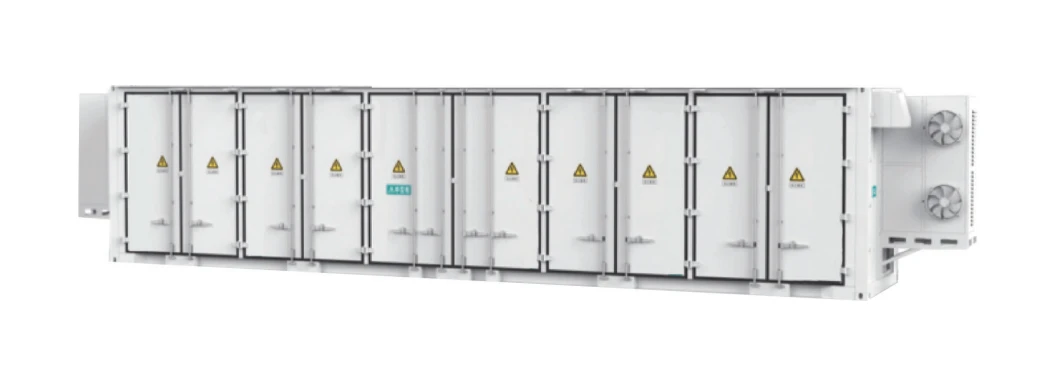
Product specs (field-ready, not just lab-pretty)
| Parameter | 20HC | 30HC | 40HC |
|---|---|---|---|
| Usable Capacity (MWh) | ≈2.67 | ≈5.02 | ≈7.53 |
| Cell Chemistry / Format | LFP 280Ah prismatic, first-line brand | ||
| Round-Trip Efficiency | ≈88–92% (AC-to-AC, site-dependent) | ||
| Cycle Life | Up to 8,000 cycles (to ≈70–80% remaining capacity) | ||
| Temperature Management | Integrated liquid/forced-air hybrid with environmental control | ||
| Fire Safety | Compartmentalized detection, clean-agent options, venting pathways | ||
How it’s built: materials, methods, testing
Materials: LFP 280Ah cells, oxygen-free copper busbars, UL-rated cables, industrial PLC, and modular power conversion (PCS) interfaces. Methods: cell matching (ΔV/ΔIR), laser-welded tabs, torque-audited busbar joints, and 100% module-level end-of-line tests. Typical testing standards targeted: IEC 62619, UL 1973, UL 9540/9540A, UN 38.3; plus FAT/SAT with thermal soak and functional safety checks. Service life: around 10–15 years under C&I cycling; utility duty varies by profile.
Where it’s used (and what people actually do with it)
- Solar + storage microgrids: PV smoothing, ride-through, black start.
- Factories and data centers: peak shaving, backup, frequency regulation.
- EV charging hubs: demand buffering and tariff arbitrage.
- Utilities: capacity firming and congestion relief at substations.
One operations manager told me, “We expected a spreadsheet win; we got calmer nights.” That’s a very human way to describe a energy management system that prevents nuisance trips and smooths volatility.
Vendor comparison (real-world considerations)
| Criterion | ACDC Centralized | Vendor B (Modular C&I) | Vendor C (Utility-scale) |
|---|---|---|---|
| Container Options | 20/30/40HC | 20/40HC | 40HC only |
| Cell Type | LFP 280Ah | LFP 200–300Ah | LFP/NMC (site-dependent) |
| Cycle Life (≈) | Up to 8,000 | 6,000–8,000 | 6,000–10,000 |
| Integration Level | Power/BMS/Thermal/Fire integrated | Partial | Integrated, utility-first |
| Cert Docs | IEC/UL test reports available on request | Varies | Comprehensive |
Process flow to commissioning
- Engineering intake: load profile, tariff, interconnect rules (IEEE 1547/NFPA 855 compatibility check).
- Factory build: cell matching, module assembly, string integration, wiring QA.
- FAT: insulation resistance, functional BMS, PCS handshake, thermal ramp tests.
- Site works: pad/cable, grounding, fire zoning; SAT and trial dispatch.
- O&M: remote diagnostics, quarterly IR scans, annual capacity test (IEC 61427 methods, where applicable).
Mini case: tariff pain to tariff gain
A Jiangsu manufacturing campus deployed a 30HC unit (≈5.02MWh). After 90 days, metered data showed 18% peak-demand reduction, 9–12% bill savings, and a 12-minute average response to dispatch (AGC emulation). The facilities lead said the energy management system “finally tamed weekend spikes.” Not revolutionary—just dependable.
Compliance, certifications, and data
Typical compliance targets: IEC 62619 (cells), UL 1973 (battery), UL 9540/9540A (system & fire), UN 38.3 (transport). Projects often align with NFPA 855 siting and local AHJ guidance. Vendor provides test reports and commissioning logs upon request. In my view, that transparency is the best feature a energy management system can offer.
References:
1) IEC 62619: Secondary lithium cells and batteries for industrial applications — IEC Webstore.
2) UL 9540/9540A: Energy Storage Systems and Fire Test Method — UL Solutions.
3) NFPA 855: Standard for the Installation of Stationary Energy Storage Systems — NFPA.
4) IEEE 1547: Interconnection of Distributed Energy Resources — IEEE SA.
-
Cedar Point EV Charging Solutions for Sustainable Tourism Experience
NewsApr.16,2026
-
Guide to Cedar Point Charging Stations for EV Park Visitors
NewsApr.16,2026
-
Acorn Stairlift Charging Point Guide for Home Mobility Optimization
NewsApr.16,2026
-
Integrating a Wireless Charging Point into Modern Infrastructure
NewsApr.16,2026
-
How to Optimize Your iPhone 14 Charging Point for Efficiency
NewsApr.16,2026
-
Analyzing the Charging Point Share Price Trends and Market Outlook
NewsApr.09,2026