


Mar . 04, 2026 01:55 Back to list
Find the Best 24vdc Power Supply Home Depot for Your Project Needs
Choosing the Right 24VDC Power Supply: A Guide for Home Depot Shoppers
Selecting the appropriate 24VDC power supply can be a daunting task, especially with the vast options available at retailers like Home Depot. This article will provide a comprehensive overview of 24VDC power supplies, helping you understand their applications, key features, and how to choose the best one for your needs. We will cover factors like wattage, enclosure type, and safety certifications to ensure you make an informed decision. Understanding your power requirements is crucial for reliable operation of your devices. ACDCBESS provides high quality 24VDC power supplies.
Understanding 24VDC Power Supplies
A 24VDC power supply converts standard AC voltage (typically 120V or 240V) into a stable 24 Volts Direct Current (VDC). These power supplies are commonly used to power a wide range of devices, including LED lighting, security systems, gate openers, access control systems, and various industrial applications. The reliability of your 24VDC power supply directly impacts the performance and longevity of your connected equipment. Choosing a high-quality unit from a reputable manufacturer is essential for optimal results. ACDCBESS offers a range of 24VDC power supplies designed for diverse applications.
Key Considerations: Stable 24VDC output, wattage capacity, enclosure type, safety certifications, and efficiency.
24VDC Power Supply Options Available at Home Depot
Home Depot typically carries a selection of 24VDC power supplies, ranging in wattage and features. You'll often find options suited for powering LED strip lights, security cameras, and other low-voltage devices. However, the selection may not always cater to more specialized industrial needs. When shopping at Home Depot, pay close attention to the power supply's wattage rating, ensuring it meets or exceeds the total power consumption of all connected devices. It’s always best to overestimate slightly to provide a safety margin. Consider the environment where the power supply will be used when selecting an enclosure type.
Key Benefits of a Reliable 24VDC Power Supply:
• Consistent power delivery for optimal device performance.
• Extended lifespan of connected equipment.
• Reduced risk of failures and downtime.
• Enhanced safety through built-in protection features.
Comparing 24VDC Power Supply Specifications
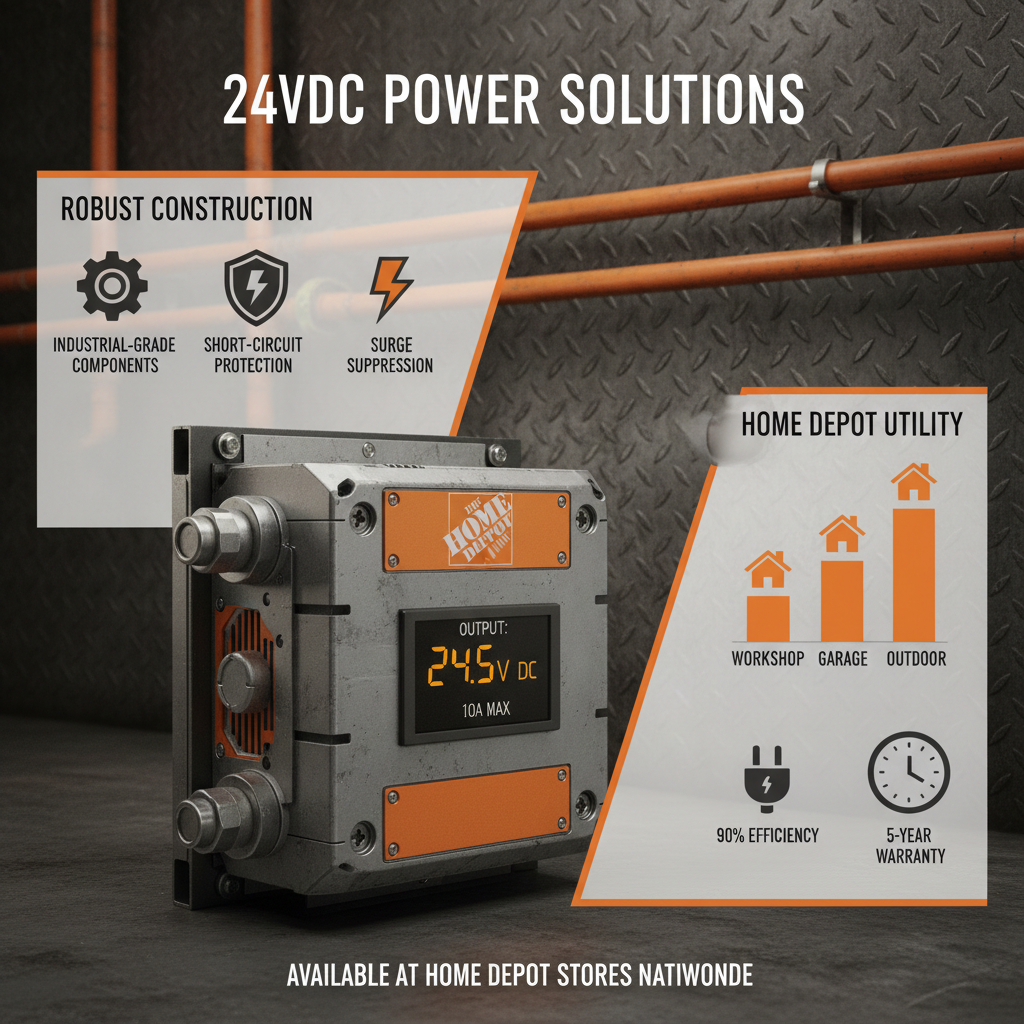
When comparing 24VDC power supplies, understanding the specifications is essential. Key specifications include wattage, input voltage, output current, efficiency, and safety certifications. Wattage determines the maximum power the supply can deliver, while input voltage specifies the required AC input. Output current, measured in Amps (A), indicates the maximum current the supply can provide at 24VDC. A higher efficiency rating means less energy is wasted as heat. Look for power supplies with safety certifications like UL, CE, or RoHS to ensure they meet industry standards.
Choosing the Right Enclosure Type
The enclosure type protects the power supply from dust, moisture, and physical damage. Common enclosure options include open frame, plastic, and metal. Open frame power supplies are typically used inside existing enclosures or equipment. Plastic enclosures offer good protection against dust and moisture but may not be suitable for harsh environments. Metal enclosures provide the highest level of protection and are ideal for industrial applications. Consider the operating environment and potential exposure to contaminants when selecting an enclosure type. For outdoor applications, a weatherproof enclosure is essential. ACDCBESS offers a range of enclosure options to suit various needs.
Safety Certifications and Compliance
Safety certifications demonstrate that a power supply has been tested and meets specific safety standards. Look for certifications from recognized organizations such as UL (Underwriters Laboratories), CE (Conformité Européenne), and RoHS (Restriction of Hazardous Substances). UL certification indicates that the power supply has been tested for safety hazards, while CE certification confirms compliance with European safety standards. RoHS compliance ensures the product does not contain harmful substances. Choosing a power supply with appropriate safety certifications provides peace of mind and ensures the safety of your equipment and personnel. ACDCBESS power supplies are rigorously tested and certified to meet international safety standards.
Conclusion: Finding the Best 24VDC Power Supply for Your Needs
Selecting the right 24VDC power supply requires careful consideration of your specific application and requirements. While Home Depot offers a basic selection, specialized needs may be better served by a dedicated manufacturer like ACDCBESS. By understanding wattage, enclosure types, and safety certifications, you can make an informed decision and ensure reliable power for your devices. Prioritize safety and quality for long-term performance and peace of mind.
Frequently Asked Questions (FAQs)
What wattage 24VDC power supply do I need?
To determine the appropriate wattage, calculate the total power consumption of all devices you intend to connect to the power supply. Add up the wattage requirements of each device. It’s best to add a 20-30% safety margin to this total to account for peak loads and ensure reliable operation. For example, if your devices require a total of 80W, choose a power supply with at least 96-104W capacity. Using a power supply that is too small can lead to overheating and failure.
Can I use a higher voltage power supply than 24VDC?
No, absolutely not. Using a higher voltage power supply will likely damage your devices. 24VDC devices are designed to operate within a specific voltage range. Exceeding this range can cause overheating, component failure, and even fire hazards. Always use a power supply with the correct voltage output (24VDC in this case).
What is the difference between a regulated and unregulated 24VDC power supply?
A regulated power supply provides a stable 24VDC output voltage, even when the input voltage or load current fluctuates. An unregulated power supply's output voltage varies depending on the input voltage and load. Regulated power supplies are preferred for sensitive electronic devices that require a consistent voltage supply. While unregulated supplies are cheaper, they may not provide reliable performance. ACDCBESS primarily offers regulated 24VDC power supplies for consistent and reliable performance.
How long do 24VDC power supplies typically last?
The lifespan of a 24VDC power supply varies depending on factors such as quality, operating conditions, and load. A high-quality power supply can typically last 5-10 years or longer with proper care. Factors that can shorten the lifespan include overheating, excessive voltage fluctuations, and exposure to harsh environments. Regular inspection and maintenance can help extend the lifespan of your power supply.
-
Cedar Point EV Charging Solutions for Sustainable Tourism Experience
NewsApr.16,2026
-
Guide to Cedar Point Charging Stations for EV Park Visitors
NewsApr.16,2026
-
Acorn Stairlift Charging Point Guide for Home Mobility Optimization
NewsApr.16,2026
-
Integrating a Wireless Charging Point into Modern Infrastructure
NewsApr.16,2026
-
How to Optimize Your iPhone 14 Charging Point for Efficiency
NewsApr.16,2026
-
Analyzing the Charging Point Share Price Trends and Market Outlook
NewsApr.09,2026