


Apr . 07, 2026 01:55 Back to list
Advancements in Microscale Mechanical Energy Storage for Sustainable Power Solutions
Exploring the Potential of Microscale Mechanical Energy Storage
In a world increasingly focused on sustainable and efficient energy solutions, microscale mechanical energy storage (mMES) is emerging as a promising field. This technology focuses on harvesting and storing small amounts of energy from ambient sources, opening doors to powering micro-devices and extending the lifespan of wearable electronics. At ACDC BESS, we are actively exploring innovations in energy storage, including the potential of mMES. This article will delve into the fundamentals of mMES, its various approaches, potential applications, current challenges, and future outlook. Understanding this technology is crucial for anyone involved in developing next-generation power sources for a wide array of applications.
What is Microscale Mechanical Energy Storage?
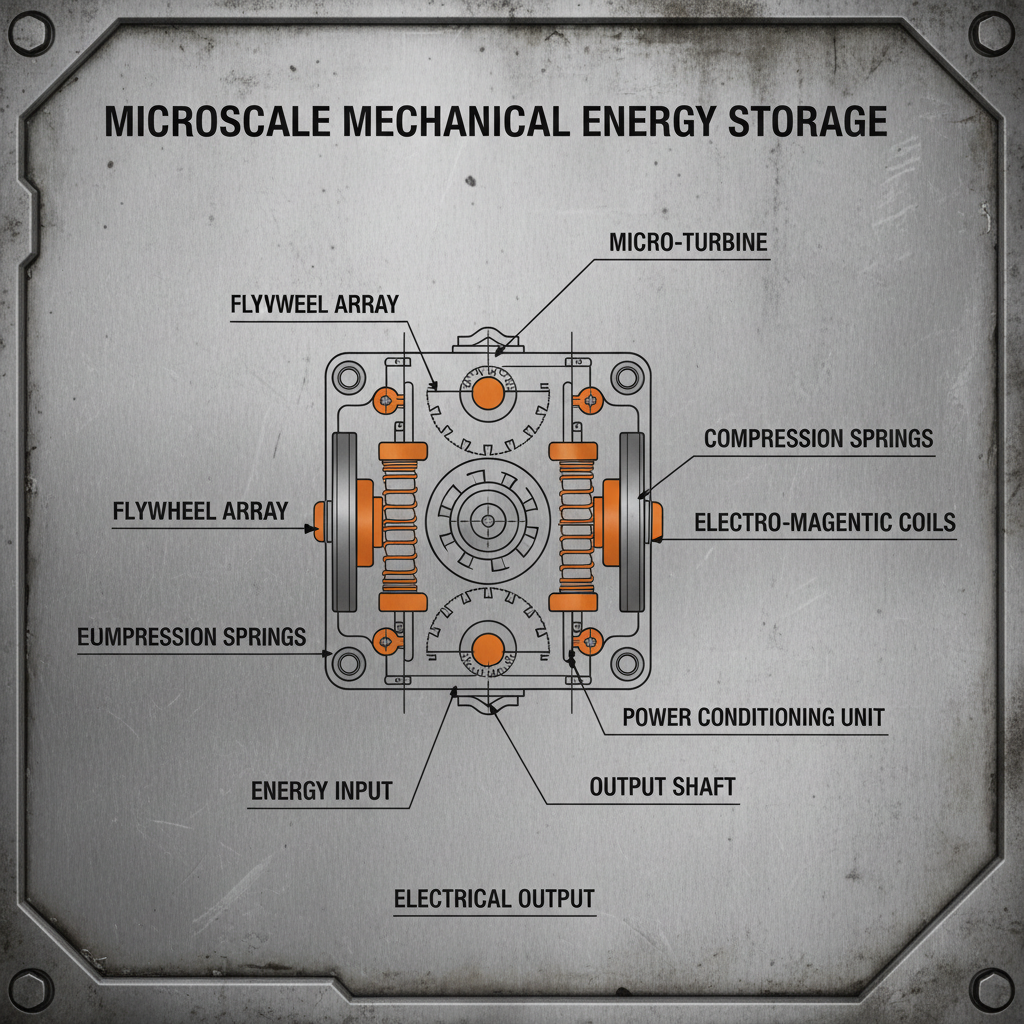
Microscale mechanical energy storage (mMES) refers to the capture and storage of energy from small-scale mechanical movements. These movements can originate from various sources, including human motion, vibrations, pressure fluctuations, and even biological processes. Unlike traditional batteries that rely on chemical reactions, mMES devices convert mechanical energy into another form of energy, typically electrical, for later use. The focus is on efficiently harvesting energy that would otherwise be lost, creating a self-powered system. This makes it ideal for applications where frequent battery replacements are impractical or undesirable. The efficiency and longevity of these systems are key areas of research and development.
Key Characteristics: mMES devices are typically small in size, lightweight, and capable of operating in harsh environments. They aim to provide a continuous, albeit limited, power supply for low-power applications.
Common Approaches to Microscale Mechanical Energy Storage
Several methods are employed to achieve mMES, each with its strengths and weaknesses. Some prominent techniques include:
- Piezoelectric Energy Harvesting: Utilizes piezoelectric materials that generate electricity when mechanically stressed.
- Electromagnetic Induction: Employs moving magnets and coils to induce electrical current.
- Electrostatic Energy Harvesting: Relies on changes in capacitance due to mechanical deformation.
- Triboelectric Nanogenerators (TENGs): Converts mechanical energy into electricity through contact electrification between two materials.
The choice of approach depends heavily on the specific application and the nature of the mechanical energy source. ACDC BESS continually evaluates and integrates new technologies to improve energy storage capacity and efficiency.
Applications of Microscale Mechanical Energy Storage
The potential applications of mMES are vast and span numerous sectors. Key areas include:
- Wearable Electronics: Powering fitness trackers, smartwatches, and health monitoring devices.
- Implantable Medical Devices: Enabling self-powered pacemakers, sensors, and drug delivery systems.
- Wireless Sensor Networks (WSNs): Providing autonomous power for environmental monitoring, structural health monitoring, and industrial automation.
- Internet of Things (IoT) Devices: Extending the battery life or eliminating the need for batteries in low-power IoT applications.
Furthermore, mMES can play a role in energy harvesting from industrial machinery vibrations, reducing reliance on traditional power sources. ACDC BESS is actively researching applications in remote monitoring and sensor technologies.
A Comparison of mMES Technologies
Different mMES technologies exhibit varying characteristics in terms of power output, efficiency, and operational requirements. The table below offers a comparative overview:
Challenges and Future Directions in Microscale Mechanical Energy Storage
Despite its promise, mMES faces several hurdles. These include low power output, limited energy storage capacity, and the need for efficient energy conversion and management circuits. Furthermore, the long-term stability and durability of mMES devices need improvement. Future research will focus on:
- Developing novel materials with enhanced energy harvesting capabilities.
- Optimizing device designs to maximize power output and efficiency.
- Integrating mMES with advanced energy storage components (e.g., micro-supercapacitors) for improved performance.
- Exploring new applications and markets for mMES technology.
ACDC BESS is dedicated to pushing the boundaries of energy storage and contributing to the development of innovative mMES solutions.
Conclusion: The Future is in Sustainable Micro-Power
Microscale mechanical energy storage represents a vital step towards sustainable and self-powered micro-devices. While challenges remain, ongoing research and development promise to unlock the full potential of this technology. As demand for portable and energy-efficient devices grows, mMES will play an increasingly important role in powering our future. ACDC BESS is committed to being at the forefront of this exciting field.
Frequently Asked Questions (FAQs)
What is the typical energy density of microscale mechanical energy storage devices?
The energy density of mMES devices is currently relatively low compared to traditional batteries, typically in the range of a few microwatts per cubic centimeter. However, ongoing research is focused on improving energy density through the development of new materials and device architectures. Researchers are exploring techniques like stacking multiple energy harvesting layers and optimizing the interface between the energy harvesting material and the storage element to increase energy density. While still a work in progress, significant advancements are being made to make mMES more competitive with existing energy storage solutions. ACDC BESS is investigating advanced material combinations to maximize energy density.
How does temperature affect the performance of mMES devices?
Temperature can significantly influence the performance of mMES devices. For piezoelectric materials, temperature affects their piezoelectric coefficients, altering their ability to generate electricity. Extreme temperatures can also impact the mechanical properties of the materials, leading to reduced efficiency or even device failure. In triboelectric nanogenerators, temperature can affect the contact electrification process and the material's surface properties. Researchers are working on developing materials and designs that are less sensitive to temperature variations to improve the reliability and performance of mMES devices in diverse environments.
What are the main limitations of triboelectric nanogenerators (TENGs)?
While TENGs offer promising energy harvesting capabilities, they face several limitations. These include relatively low output voltage, susceptibility to humidity, and potential for material degradation due to repeated contact. The stability and durability of TENGs can also be affected by factors like surface contamination and wear. Researchers are actively addressing these challenges by developing new materials with improved triboelectric properties, exploring encapsulation techniques to protect against humidity, and optimizing device designs to enhance stability and longevity.
-
Cedar Point EV Charging Solutions for Sustainable Tourism Experience
NewsApr.16,2026
-
Guide to Cedar Point Charging Stations for EV Park Visitors
NewsApr.16,2026
-
Acorn Stairlift Charging Point Guide for Home Mobility Optimization
NewsApr.16,2026
-
Integrating a Wireless Charging Point into Modern Infrastructure
NewsApr.16,2026
-
How to Optimize Your iPhone 14 Charging Point for Efficiency
NewsApr.16,2026
-
Analyzing the Charging Point Share Price Trends and Market Outlook
NewsApr.09,2026