


Mar . 21, 2026 01:55 Back to list
Comprehensive Guide to Mobile Home Power Supply Cable Selection and Safety
Choosing the Right Mobile Home Power Supply Cable for Safe and Reliable Power
Ensuring a safe and reliable power supply in your mobile home is paramount. A crucial component of this system is the mobile home power supply cable. Selecting the correct cable type and specifications is vital for preventing electrical hazards and maintaining consistent power. This article will provide a comprehensive overview of mobile home power supply cables, covering types, safety considerations, installation, and where to find high-quality options. Choosing the right cable safeguards your home and loved ones.
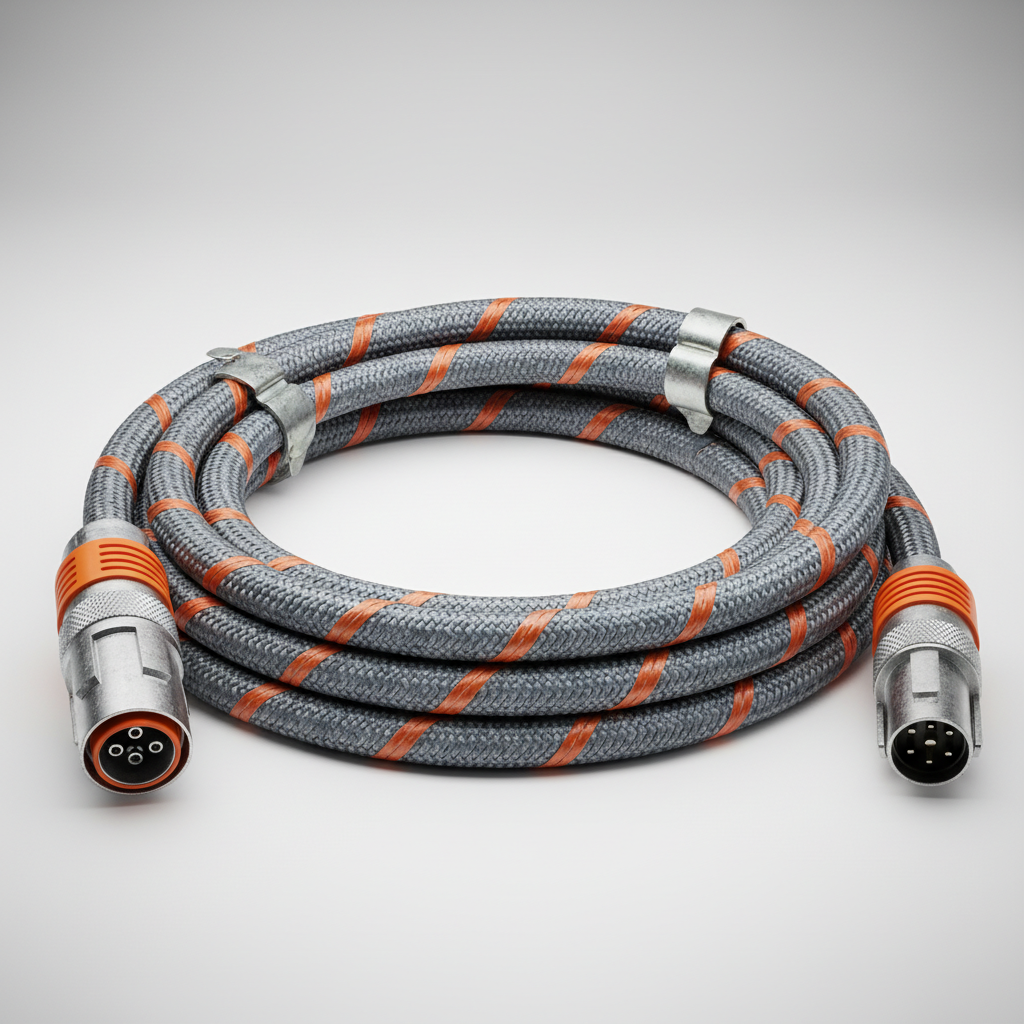
Understanding the Different Types of Mobile Home Power Supply Cables
Mobile home power supply cables aren't one-size-fits-all. They come in various types, each designed for specific amperage and voltage requirements. The most common types include 30-amp and 50-amp cables. A 30-amp cable typically has three wires (hot, neutral, and ground) and is sufficient for smaller mobile homes with fewer appliances. A 50-amp cable features four wires (two hot, neutral, and ground) and is necessary for larger mobile homes with higher power demands, such as air conditioning or electric heating. Understanding your home's electrical needs is the first step in selecting the appropriate cable. It’s crucial to consult with a qualified electrician to determine the correct amperage for your mobile home.
Key Takeaway: Choosing the correct amperage cable is critical for preventing overloading the electrical system and minimizing fire hazards.
Key Features to Look for in a Mobile Home Power Supply Cable
Beyond amperage, several key features contribute to the safety and longevity of a mobile home power supply cable. Look for cables constructed with durable, weather-resistant materials, such as heavy-duty PVC or thermoplastic elastomer (TPE). The cable should also be UV-resistant to prevent degradation from sunlight exposure. Furthermore, the connector ends should be made of high-quality, corrosion-resistant materials to ensure a secure and reliable connection. A properly designed cable will also be flexible enough to handle temperature variations without cracking or becoming brittle. ACDCBESS offers a wide range of high-quality cables designed to meet these requirements.
Essential Cable Features:
• Durable, weather-resistant materials (PVC or TPE)
• UV resistance to prevent degradation
• Corrosion-resistant connector ends
• Flexibility for temperature variations
30-Amp vs. 50-Amp Cables: A Detailed Comparison
Choosing between a 30-amp and 50-amp cable can be confusing. This comparison provides a clearer understanding of the differences and which cable is best suited for your needs. The primary difference lies in the power capacity each cable can handle. A 50-amp cable can deliver twice the power of a 30-amp cable, making it ideal for larger mobile homes with multiple high-wattage appliances. However, it's important to note that you can't simply upgrade to a 50-amp cable if your mobile home's electrical system is only designed for 30 amps. Doing so could overload the system and create a fire hazard. Always consult an electrician to ensure compatibility.
Safety Considerations When Using Your Mobile Home Power Supply Cable
Safety should always be your top priority when dealing with electrical systems. Regularly inspect your mobile home power supply cable for any signs of damage, such as cracks, fraying, or exposed wires. Never use a damaged cable, as this poses a serious electrical shock and fire hazard. Avoid stepping on or running heavy objects over the cable. Ensure the connections at both ends are tight and secure. If you’re unsure about any aspect of electrical work, always consult a qualified electrician. Proper grounding is also essential for safety.
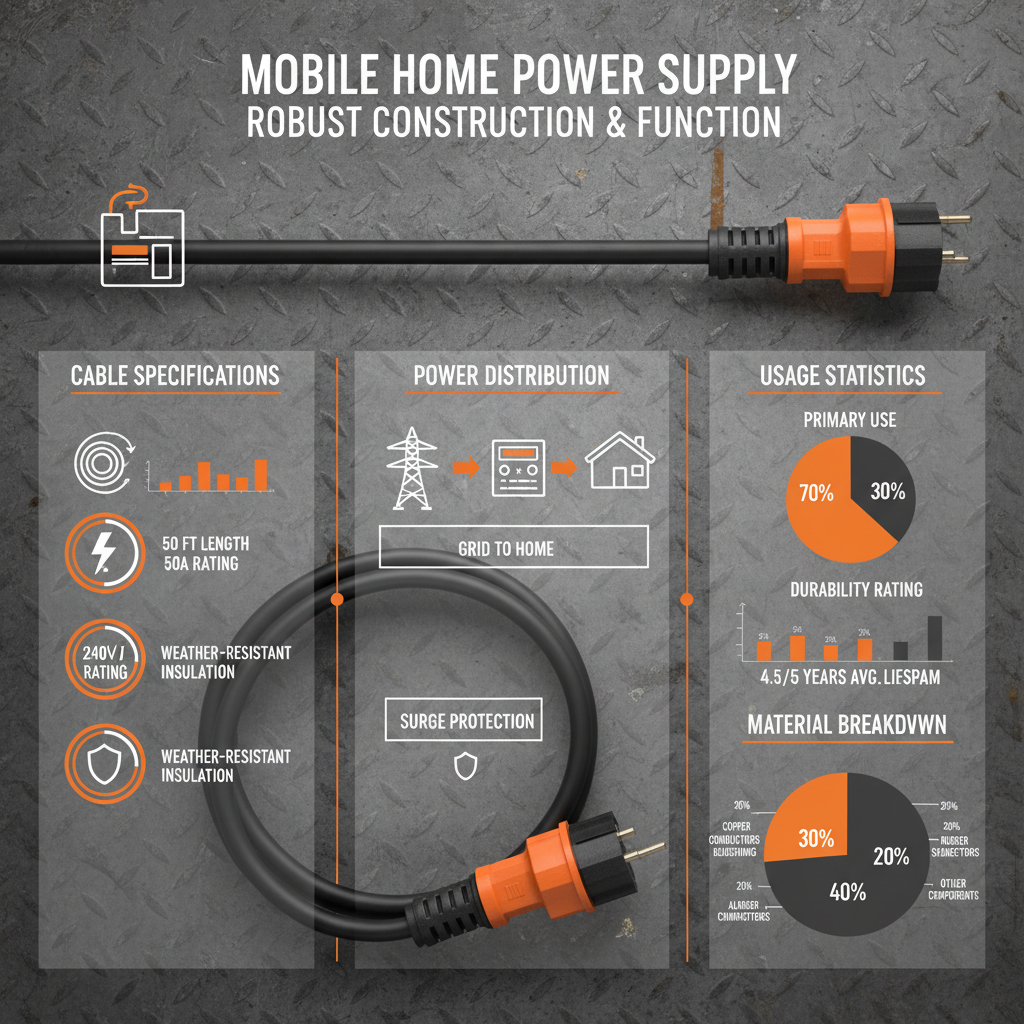
Where to Purchase High-Quality Mobile Home Power Supply Cables
Investing in a high-quality power supply cable is essential for ensuring the safety and reliability of your mobile home's electrical system. ACDCBESS offers a comprehensive selection of cables specifically designed for mobile home applications. We pride ourselves on providing durable, safe, and compliant products, backed by excellent customer support. Browse our selection today and find the perfect cable for your needs. We also offer expert advice to help you choose the right cable for your mobile home’s specific electrical requirements.
Conclusion: Powering Your Mobile Home Safely and Reliably
Choosing the right mobile home power supply cable is a crucial step in ensuring the safety and comfort of your home. By understanding the different types, key features, and safety considerations, you can make an informed decision and avoid potential electrical hazards. Don’t compromise on quality – invest in a reliable cable from a trusted source like ACDCBESS.
Frequently Asked Questions (FAQs)
How often should I replace my mobile home power supply cable?
While a well-maintained cable can last several years, it's generally recommended to replace it every 5-7 years, or sooner if you notice any signs of damage. Factors like exposure to extreme weather, frequent use, and physical stress can accelerate wear and tear. Regularly inspecting the cable and replacing it proactively can prevent potentially dangerous electrical issues. It's also important to replace the cable if it's been involved in an incident, even if the damage isn’t immediately visible. The cost of replacement is minimal compared to the risk of an electrical fire or shock.
Can I repair a damaged mobile home power supply cable?
No, you should never attempt to repair a damaged mobile home power supply cable. Even a seemingly minor repair can compromise the cable's integrity and create a significant safety hazard. Electrical cables are designed to be a sealed unit, and any tampering can expose live wires or weaken the insulation. It’s always best to replace the entire cable if it’s damaged. Attempting repairs yourself could void any warranties and potentially lead to serious injury or property damage. Always prioritize safety and seek professional assistance.
What gauge wire is appropriate for a 30-amp mobile home cable?
For a 30-amp mobile home cable, a 10-gauge wire is generally recommended. This gauge provides sufficient current-carrying capacity to handle the 30-amp load safely. Using a wire gauge that is too small can cause the cable to overheat, potentially leading to a fire. It’s crucial to adhere to local electrical codes and regulations regarding wire gauge specifications. Always consult with a qualified electrician to ensure you are using the correct gauge wire for your specific application. Using a higher gauge wire (e.g. 8-gauge) can also provide an added margin of safety.
What is the importance of grounding in a mobile home electrical system?
Grounding is a vital safety feature in any electrical system, especially in mobile homes. It provides a path for stray electrical currents to flow safely back to the source, preventing electrical shock and reducing the risk of fire. The ground wire in your power supply cable connects the electrical system to a grounding rod or other grounding source. If a fault occurs, such as a short circuit, the ground wire will redirect the current, tripping a breaker and shutting off the power. Never tamper with or disconnect the ground wire, as this could create a dangerous situation. Regularly inspect the grounding connection to ensure it's secure and corrosion-free.
-
Cedar Point EV Charging Solutions for Sustainable Tourism Experience
NewsApr.16,2026
-
Guide to Cedar Point Charging Stations for EV Park Visitors
NewsApr.16,2026
-
Acorn Stairlift Charging Point Guide for Home Mobility Optimization
NewsApr.16,2026
-
Integrating a Wireless Charging Point into Modern Infrastructure
NewsApr.16,2026
-
How to Optimize Your iPhone 14 Charging Point for Efficiency
NewsApr.16,2026
-
Analyzing the Charging Point Share Price Trends and Market Outlook
NewsApr.09,2026