


Apr . 07, 2026 01:45 Back to list
Exploring Mechanical Potential Energy Storage for Sustainable Power Solutions
Mechanical Potential Energy Storage: A Comprehensive Guide
In the pursuit of efficient and sustainable energy solutions, mechanical potential energy storage (MPES) has emerged as a promising technology. Unlike traditional battery storage, MPES leverages the principles of physics to store energy through mechanical means, offering advantages like long lifespan, high efficiency, and environmental friendliness. This article will delve into the fundamentals of MPES, explore its various forms, discuss its applications, and highlight the benefits it offers. Understanding MPES is crucial as we transition towards a more sustainable energy future. ACDC BESS provides advanced energy storage solutions, including insights into maximizing the effectiveness of MPES systems.
Understanding Mechanical Potential Energy Storage
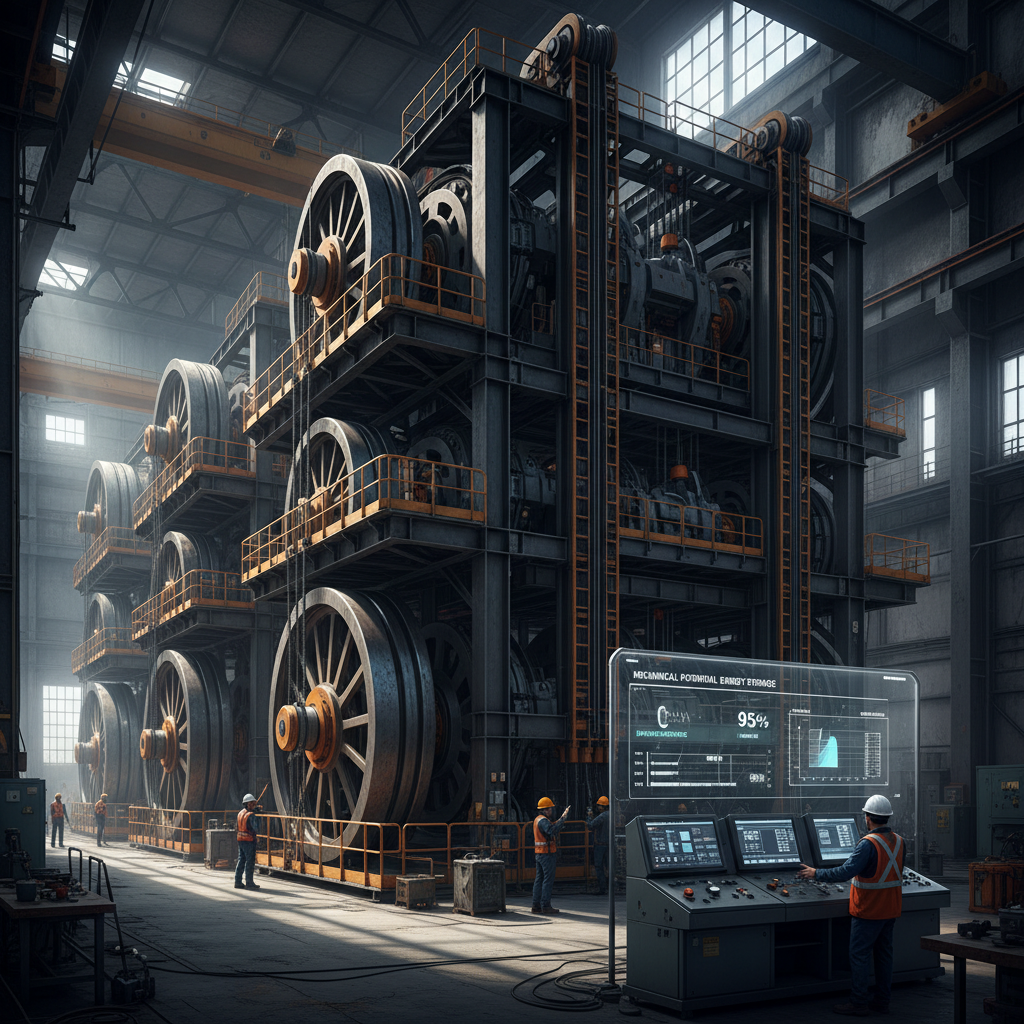
At its core, mechanical potential energy storage involves converting electrical energy into mechanical energy, storing it, and then converting it back to electrical energy when needed. This process doesn't rely on chemical reactions like batteries, making it a more durable and environmentally sound option. The stored energy exists as potential energy, meaning energy that has the potential to do work. This potential energy is typically stored through mechanisms like raising a weight, compressing a spring, or building up tension in a flywheel. ACDC BESS specializes in integrating these technologies to create robust and reliable energy storage solutions.
Key Benefit: MPES systems offer significantly longer lifespans compared to traditional batteries, reducing long-term costs and environmental impact.
Different Types of Mechanical Potential Energy Storage
Several technologies fall under the umbrella of MPES, each with its strengths and weaknesses. The most common types include:
- Pumped Hydro Storage (PHS): This is the most established MPES technology, involving pumping water uphill to a reservoir during periods of low demand and releasing it to generate electricity when demand is high.
- Compressed Air Energy Storage (CAES): CAES stores energy by compressing air into underground caverns or tanks. This compressed air is then released to drive turbines and generate electricity.
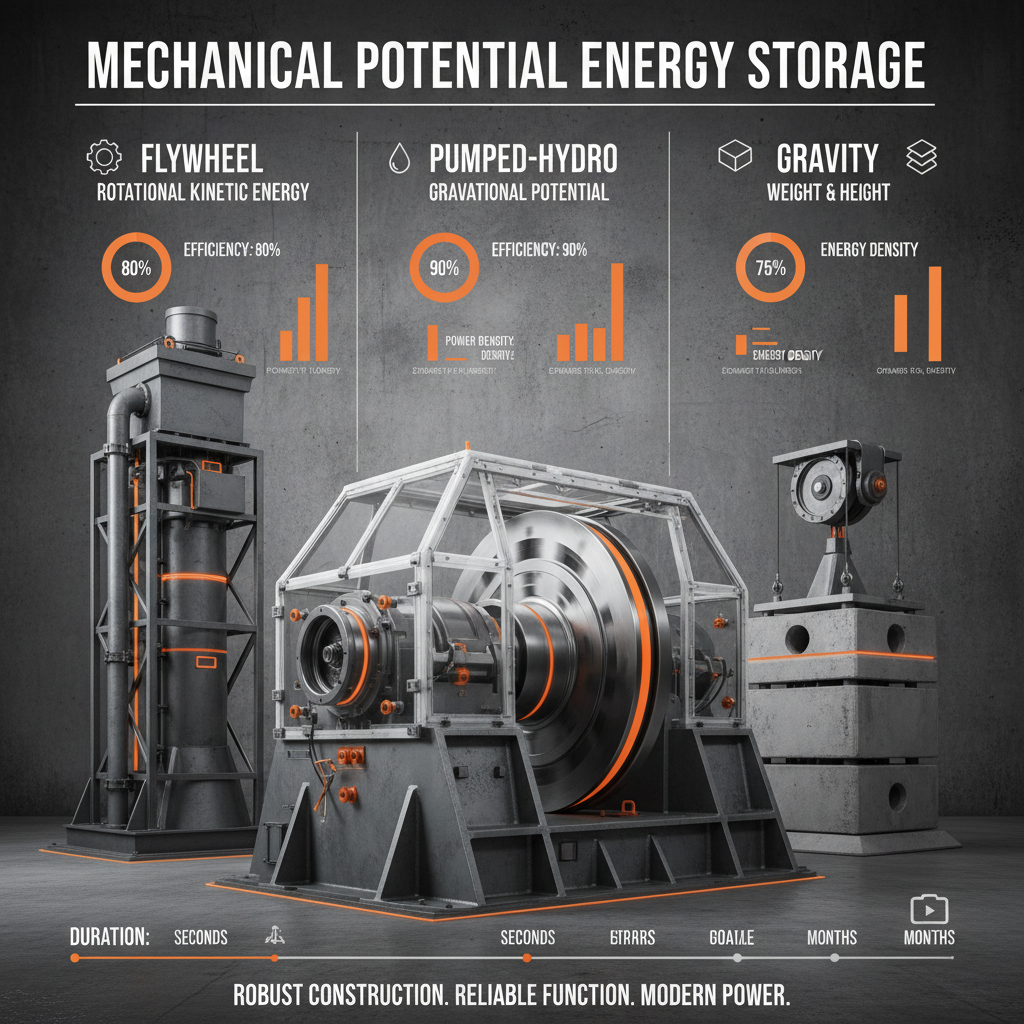
- Flywheel Energy Storage (FES): FES uses a rotating cylinder (flywheel) to store kinetic energy. Energy is added by spinning the flywheel faster, and retrieved by slowing it down.
- Gravity Energy Storage (GES): GES, a newer approach, lifts and lowers heavy weights to store and release energy. This can utilize existing infrastructure like mineshafts.
MPES Technologies at a Glance:
• Pumped Hydro Storage: Mature technology, large-scale capacity, geographically limited.
• Compressed Air Energy Storage: High efficiency, requires suitable geological formations.
• Flywheel Energy Storage: Fast response time, suitable for frequency regulation.
• Gravity Energy Storage: Emerging technology, potentially cost-effective, location-dependent.
Mechanical Potential Energy Storage vs. Battery Storage: A Comparative Analysis
While both MPES and battery storage serve the same purpose – storing energy – they differ significantly in their characteristics. Batteries excel in energy density and scalability, making them ideal for residential and mobile applications. However, MPES systems generally boast longer lifespans, lower degradation rates, and are more environmentally friendly due to the absence of rare earth materials. The table below provides a detailed comparison:
Applications of Mechanical Potential Energy Storage
MPES technologies are finding applications across diverse sectors, including:
- Grid Stabilization: Providing frequency regulation and smoothing out fluctuations in renewable energy sources.
- Renewable Energy Integration: Storing excess energy generated from solar and wind power for later use.
- Peak Shaving: Reducing electricity costs by storing energy during off-peak hours and discharging it during peak demand.
- Microgrids: Enhancing the reliability and resilience of localized energy systems.
ACDC BESS offers comprehensive solutions for integrating MPES into these applications, providing optimized performance and reliability.
The Future of Mechanical Potential Energy Storage
The future of MPES looks bright, with ongoing research and development focused on improving efficiency, reducing costs, and expanding the range of applications. Advancements in materials science and engineering are leading to more compact and powerful MPES systems. As the demand for sustainable energy solutions continues to grow, MPES is poised to play a significant role in shaping the energy landscape. ACDC BESS is dedicated to driving innovation in energy storage, ensuring a reliable and sustainable energy future for all.
Conclusion: Harnessing the Power of Physics for a Sustainable Future
Mechanical potential energy storage offers a compelling alternative to traditional battery storage, providing long lifespans, environmental benefits, and grid-scale capacity. As technology advances and costs decrease, MPES is poised to become a key component of the global energy transition. Embracing innovative solutions like MPES is crucial for building a more sustainable and resilient energy future.
Frequently Asked Questions (FAQs)
What are the limitations of Pumped Hydro Storage (PHS)?
While PHS is a well-established technology, it has limitations. Primarily, it requires specific geographical features – namely, significant elevation differences and suitable reservoirs. This limits its deployment to areas with these characteristics. Additionally, building new PHS facilities can have environmental impacts, such as altering river ecosystems and displacing communities. These factors need careful consideration during project planning.
How efficient is Compressed Air Energy Storage (CAES)?
The efficiency of CAES systems varies depending on the design and operating conditions. First-generation CAES plants typically have round-trip efficiencies of around 40-55%. However, advanced adiabatic CAES (A-CAES) systems, which store the heat generated during compression, can achieve efficiencies of 70% or higher. Further advancements in thermal storage technology are expected to further improve CAES efficiency.
What are the advantages of Flywheel Energy Storage (FES) over other MPES technologies?
FES offers several advantages. It boasts extremely fast response times, making it ideal for frequency regulation and power quality control. It also has a very long lifespan with minimal degradation. Unlike batteries, FES doesn't rely on chemical reactions, so it's more environmentally friendly and less susceptible to temperature effects. However, FES typically has a lower energy density compared to other MPES technologies, meaning it requires more space for a given amount of storage.
Is Gravity Energy Storage (GES) a viable long-term solution?
GES is a promising emerging technology, but it's still in the early stages of development. Its viability depends on finding suitable locations – such as abandoned mineshafts – and developing efficient lifting and lowering mechanisms. The cost-effectiveness of GES will be a key factor in its long-term success. However, the potential to repurpose existing infrastructure and utilize readily available materials makes it an attractive option for large-scale energy storage.
-
Cedar Point EV Charging Solutions for Sustainable Tourism Experience
NewsApr.16,2026
-
Guide to Cedar Point Charging Stations for EV Park Visitors
NewsApr.16,2026
-
Acorn Stairlift Charging Point Guide for Home Mobility Optimization
NewsApr.16,2026
-
Integrating a Wireless Charging Point into Modern Infrastructure
NewsApr.16,2026
-
How to Optimize Your iPhone 14 Charging Point for Efficiency
NewsApr.16,2026
-
Analyzing the Charging Point Share Price Trends and Market Outlook
NewsApr.09,2026