


Sep . 14, 2025 07:40 Back to list
Smart Energy Management System: Optimize Costs & Boost Efficiency
Introduction to Advanced Energy Management Systems (EMS)
In today's rapidly evolving industrial landscape, optimizing energy consumption and ensuring operational resilience are paramount. An advanced energy management system (EMS) is a sophisticated platform designed to monitor, control, and optimize energy usage within a facility or across multiple sites. These systems are critical for reducing operational costs, enhancing sustainability, and complying with stringent environmental regulations. By providing real-time data and actionable insights, an EMS empowers businesses to make informed decisions regarding their energy infrastructure, shifting from reactive maintenance to proactive, predictive energy management.
The market for energy management solutions is experiencing robust growth, driven by rising energy prices, the global push for decarbonization, and the increasing complexity of modern power grids. Industries ranging from manufacturing and petrochemicals to data centers and commercial buildings are adopting EMS to gain a competitive edge and secure their energy future. These systems integrate various technologies, including IoT sensors, advanced analytics, machine learning, and automation, to deliver comprehensive energy intelligence.
Current Industry Trends in Energy Management Systems
The energy management system sector is dynamic, continually adapting to new technological advancements and market demands. Key trends shaping the industry include:
- AI and Machine Learning Integration: Predictive analytics, anomaly detection, and automated optimization are increasingly powered by AI and ML algorithms, leading to more accurate forecasting and efficient resource allocation.
- Edge Computing and IoT: The proliferation of IoT devices at the edge allows for faster data processing and localized control, reducing latency and improving system responsiveness. This is crucial for real-time demand response and fault detection.
- Grid Interactivity and Demand Response: Modern energy management system ems solutions are designed to interact seamlessly with smart grids, enabling participation in demand response programs and optimizing energy storage dispatch for grid stability and revenue generation.
- Cybersecurity Enhancements: As EMS become more integrated and connected, robust cybersecurity measures are paramount to protect critical infrastructure from cyber threats and ensure data integrity.
- Sustainability and Decarbonization Focus: The drive towards Net Zero emissions is pushing for EMS that can integrate renewable energy sources, optimize their output, and provide detailed carbon footprint reporting.
These trends collectively signify a shift towards more intelligent, resilient, and sustainable energy infrastructures. Businesses are seeking solutions that not only cut costs but also support their broader environmental, social, and governance (ESG) objectives.
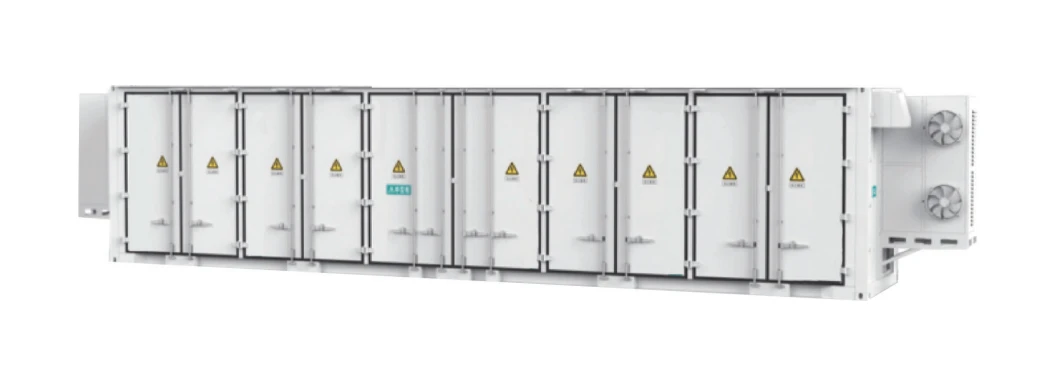
Illustration of a typical energy management system architecture.
Technical Specifications and Core Components of an EMS
A robust energy management system comprises several key technical components working in concert to deliver comprehensive energy intelligence. Understanding these specifications is crucial for B2B decision-makers and engineers evaluating solutions.
- Data Acquisition Unit (DAU): Gathers real-time data from sensors, meters, and other devices. Specifications include sampling rates (e.g., 1-second intervals), input types (e.g., analog, digital, Modbus, BACnet), and communication protocols (e.g., Ethernet, Wi-Fi, LoRaWAN).
- Central Processing Unit (CPU) / Server: The core computational engine. High-performance processors (e.g., Intel Xeon E3/E5 equivalents) and ample RAM (e.g., 16-64GB) are required for complex analytics.
- Database Management System (DBMS): Stores vast amounts of historical and real-time energy data. Scalable databases (e.g., PostgreSQL, InfluxDB) are essential for long-term data retention and fast querying.
- Analytics & Optimization Engine: Employs algorithms for load forecasting, demand response, peak shaving, and fault diagnosis. Utilizes machine learning models for predictive maintenance and energy efficiency recommendations.
- User Interface (UI) / Human-Machine Interface (HMI): Intuitive dashboards for visualization, reporting, and control. Web-based access and mobile compatibility are standard.
- Control Modules: Actuators and relays for direct control of HVAC, lighting, industrial machinery, and energy storage systems.
Example Product Specification Table: Centralized Energy Management Module
| Parameter | Specification | Notes |
|---|---|---|
| Processor | Industrial-grade ARM Cortex A53 (Quad-core, 1.2 GHz) | High-performance, low-power for continuous operation |
| Memory (RAM) | 4GB DDR4 | Supports complex data processing and real-time analytics |
| Storage | 128GB eMMC (expandable via SSD) | Robust storage for historical data and system logs |
| Communication Interfaces | 2x Gigabit Ethernet, 4x RS485, Wi-Fi 802.11ac, 4G/LTE | Versatile connectivity for diverse field devices |
| Operating System | Linux-based (custom kernel) | Secure, stable, and highly customizable |
| Protocols Supported | Modbus TCP/RTU, IEC 61850, BACnet/IP, SNMP, MQTT | Ensures interoperability with existing infrastructure |
| Power Supply | DC 12V-24V (redundant input optional) | Industrial standard, robust against power fluctuations |
| Operating Temperature | -20°C to +70°C | Suitable for harsh industrial environments |
These specifications highlight the robust design and advanced capabilities expected from a modern energy management system. Adherence to industry standards like ISO 50001 (Energy Management Systems) further underscores the quality and effectiveness of such solutions.
Manufacturing Process Flow of an Energy Management System
The development and manufacturing of a high-quality energy management system involves a rigorous, multi-stage process, ensuring reliability, precision, and longevity. This structured approach, from conceptualization to final testing, guarantees a product capable of performing under demanding industrial conditions.
Process Flow Schematic:
- 1. Conceptual Design & Requirements Definition:
- Define functional specifications, target industries (e.g., petrochemical, metallurgy, water supply & drainage), and compliance standards (e.g., ISO 50001, ANSI/ISA-95).
- Determine hardware architecture, software modules, and communication protocols.
- 2. Component Sourcing & Material Selection:
- Procure industrial-grade microprocessors, memory, communication modules, and power supply units.
- Select durable materials for enclosures, such as corrosion-resistant aluminum alloys (e.g., Al 6061) or high-impact, fire-retardant polycarbonate for harsh environments.
- 3. Printed Circuit Board (PCB) Manufacturing & Assembly:
- Fabrication of multi-layer PCBs (e.g., 6-12 layers) using FR-4 epoxy laminate.
- Automated Surface Mount Technology (SMT) and Through-Hole Technology (THT) assembly for component placement.
- Quality checks include Automated Optical Inspection (AOI) and X-ray inspection.
- 4. Enclosure Fabrication:
- Casting: For complex shapes or heavy-duty industrial enclosures, using materials like die-cast aluminum for excellent heat dissipation and corrosion resistance.
- Forging: For structural components requiring extreme strength and impact resistance.
- CNC Machining: Precision machining of metal or plastic components for accurate fit and finish, ensuring IP ratings (e.g., IP65, IP67) for dust and water ingress protection.
- Surface treatments: Anodizing, powder coating for enhanced durability and corrosion resistance.
- 5. Software Development & Integration:
- Development of firmware, operating system (e.g., Linux kernel), data acquisition software, analytics engine, and user interface.
- Integration of various modules and verification of interoperability.
- 6. System Assembly:
- Mounting PCBs into enclosures, wiring internal components, and connecting external interfaces.
- Ensuring proper grounding and electromagnetic compatibility (EMC).
- 7. Rigorous Testing & Quality Assurance:
- Functional Testing: Verifying all hardware and software components operate as designed.
- Environmental Testing: Exposing the system to extreme temperatures, humidity, vibration, and shock according to ISO and ANSI standards (e.g., IEC 60068 for environmental testing).
- EMI/EMC Testing: Compliance with standards like FCC Part 15 and CE EN 55032.
- Burn-in Testing: Continuous operation under load for extended periods (e.g., 72-168 hours) to identify early failures.
- Software Validation: Penetration testing, vulnerability assessments, and performance benchmarks.
- 8. Calibration & Certification:
- Calibrating sensors and measurement devices to ensure accuracy.
- Obtaining necessary certifications (e.g., CE, RoHS, UL, FCC) for market entry.
The result of this meticulous process is an energy management system designed for a service life of 10-15 years, offering high reliability and performance even in challenging industrial settings. The emphasis on materials like corrosion-resistant alloys and robust manufacturing techniques ensures significant advantages in typical application scenarios, such as enhanced energy saving and exceptional corrosion resistance.
Application Scenarios and Target Industries
The versatility of an advanced energy management system ems allows it to be deployed across a diverse range of industries, each benefiting from tailored energy optimization strategies.
- Petrochemical Industry: Critical for managing the immense energy demands of refining and chemical processes. An EMS optimizes compressor operation, furnace efficiency, and steam distribution, leading to substantial energy savings and reduced emissions. Its corrosion resistance is vital in harsh chemical environments.
- Metallurgy and Heavy Manufacturing: Energy-intensive operations like smelting, rolling, and forging benefit from precise energy monitoring and control. An EMS helps minimize peak demand charges, optimize motor control, and manage waste heat recovery, significantly cutting operational costs.
- Water Supply & Drainage: Pumping stations and water treatment plants consume vast amounts of electricity. An EMS optimizes pump scheduling based on real-time demand, minimizes power losses, and ensures continuous operation, enhancing energy saving and system reliability.
- Data Centers: Energy costs for cooling and power delivery are paramount. An EMS integrates with HVAC, UPS, and server racks to optimize power usage effectiveness (PUE), identify phantom loads, and ensure uninterrupted power supply, maximizing energy efficiency.
- Commercial Buildings & Campuses: From large office complexes to university campuses, an EMS centralizes control over lighting, HVAC, and building automation systems, providing granular insights into consumption patterns and enabling proactive adjustments for comfort and efficiency.
In these scenarios, the advantages are clear: significant energy saving, extended equipment lifespan due to optimized operation, and enhanced corrosion resistance for components exposed to aggressive environments, ensuring long-term performance and reduced maintenance.
Technical Advantages of Advanced Energy Management Systems
Modern energy management system platforms offer a suite of technical advantages that translate directly into operational excellence and financial savings for B2B clients.
- Real-time Granular Monitoring: Beyond simple utility meter readings, advanced EMS provide sub-metering capabilities, offering detailed consumption data down to individual circuits or machinery. This precision allows for accurate identification of energy waste.
- Predictive Analytics & Forecasting: Leveraging AI and historical data, the system can predict future energy demand, allowing for proactive adjustments and optimized scheduling of energy-intensive processes, minimizing peak demand charges.
- Automated Optimization & Control: EMS can automatically adjust building systems (HVAC, lighting) and industrial processes based on predefined rules, real-time conditions, and energy pricing, ensuring continuous efficiency without manual intervention.
- Fault Detection & Diagnostics (FDD): The system can detect anomalies in energy consumption or equipment performance, flagging potential faults before they lead to costly breakdowns or significant energy waste.
- Seamless Integration Capabilities: Advanced EMS are designed for interoperability, integrating with existing SCADA, BMS, MES, and ERP systems using standard protocols, ensuring a unified view of operations.
- Enhanced Cybersecurity: Employing robust encryption, secure communication protocols, and role-based access control to protect sensitive operational data from cyber threats.
- Scalability and Flexibility: Solutions can be scaled from a single facility to a multi-site enterprise, adapting to growing operational demands and evolving energy strategies.
These technical capabilities lead to substantial efficiency gains, reduced operational risk, and improved compliance with environmental regulations, solidifying the value proposition of a modern energy management system.
OEM Energy Management System Solutions and Vendor Comparison
For businesses looking to integrate advanced energy management capabilities into their own product lines or facility offerings, oem energy management system solutions provide a white-label or deeply integrated option. This allows for rapid deployment of sophisticated energy intelligence without the extensive R&D investment.
When selecting an energy management system ems vendor, especially for OEM partnerships, it's crucial to evaluate several factors beyond just technical specifications.
Vendor Comparison Table: Key Evaluation Criteria for OEM EMS Providers
| Criterion | Leading Provider A (e.g., ACDC BESS) | Competitor B (Example) | Competitor C (Example) |
|---|---|---|---|
| Core Expertise | Centralized Energy Storage, Grid Optimization, Industrial EMS | Building Management, HVAC Control | Renewable Integration, Microgrid Solutions |
| Customization Capability | High (White-labeling, API access, bespoke software modules) | Moderate (Configuration options) | Limited (Off-the-shelf platforms) |
| Integration Protocols | Modbus, IEC 61850, BACnet, MQTT, OPC UA | BACnet, Modbus | Proprietary APIs, limited open protocols |
| AI/ML Capabilities | Advanced Predictive Analytics, Anomaly Detection | Basic Load Forecasting | Renewable Energy Forecasting |
| Cybersecurity Posture | Robust (ISO 27001, continuous penetration testing) | Standard (Regular updates) | Moderate (Firewall, VPN) |
| Geographical Reach & Support | Global presence, 24/7 technical support | Regional focus, business hours support | Specific country focus |
This comparison highlights the importance of aligning vendor capabilities with specific project requirements, particularly for oem energy management system applications where deep integration and tailored features are paramount. A partner with strong customization and integration expertise, backed by robust support, is invaluable.
Customized Solutions and Integration Capabilities
The true power of a modern energy management system lies in its ability to be customized and seamlessly integrated into a client's existing operational technology (OT) and information technology (IT) infrastructure. This is particularly vital for large industrial complexes with bespoke control systems and unique energy profiles.
Our approach to customized solutions involves a multi-phase engagement:
- Discovery and Assessment: In-depth analysis of existing energy infrastructure, operational processes, energy consumption patterns, and specific client objectives (e.g., peak demand reduction, carbon emissions targets, reliability enhancement).
- Solution Design: Tailoring the EMS architecture, sensor deployment strategy, data analytics modules, and control algorithms to meet identified needs. This includes developing custom dashboards and reports relevant to the client's KPIs.
- Integration Planning: Detailed strategy for integrating with existing SCADA, DCS, BMS, and ERP systems. Utilizing industry-standard APIs (RESTful, SOAP) and communication protocols (Modbus, OPC UA, IEC 61850) ensures minimal disruption and maximum interoperability.
- Pilot Deployment & Validation: Implementing a pilot project in a specific section of the facility to validate the custom solution's performance, refine parameters, and gather initial feedback before full-scale deployment.
- Full-Scale Implementation & Optimization: Phased rollout across the entire facility, followed by continuous monitoring and iterative optimization to ensure sustained performance and adaptation to changing operational conditions.
This rigorous process ensures that the deployed energy management system is not just a generic product but a precisely engineered solution that delivers maximum value, offering a compelling return on investment for our clients.
Application Case Studies: Real-World Impact
Our energy management system has demonstrated tangible benefits across various industrial applications. These case studies highlight real-world energy saving, operational efficiency, and environmental compliance achievements.
Case Study 1: Large-Scale Petrochemical Complex
Challenge: A major petrochemical complex faced escalating energy costs due to inefficient steam generation and distribution, coupled with high peak demand charges. Existing manual monitoring provided insufficient insights for optimization.
Solution: We implemented a comprehensive energy management system integrated with over 500 sensors across boilers, turbines, and processing units. The system included real-time steam flow analysis, predictive load balancing, and automated control for auxiliary systems.
Results: Within 12 months, the client achieved a 14% reduction in overall electricity consumption and an 18% decrease in peak demand charges. Steam generation efficiency improved by 7%, leading to annual savings exceeding $3.5 million. The corrosion resistance of the deployed hardware also proved critical in maintaining system integrity in the aggressive chemical environment.
Customer Feedback: "The new EMS provided unparalleled visibility into our energy usage. The automated optimization functions have not only cut our operational costs significantly but also enhanced our environmental performance." - Head of Operations, Global Petrochemicals
Case Study 2: Municipal Water Treatment Plant
Challenge: A municipal water treatment facility struggled with high energy consumption from its pumping stations, especially during varying demand cycles, leading to unpredictable operational expenses.
Solution: Our energy management system ems was deployed to monitor pump efficiency, water flow rates, and energy tariff data in real-time. The system implemented AI-driven pump scheduling to optimize operation during off-peak hours and reduce energy draw during high-cost periods.
Results: The plant achieved a 22% reduction in electricity costs related to pumping operations within the first year. The EMS also provided early detection of pump cavitation, preventing potential equipment damage and costly downtime.
Customer Feedback: "The system has transformed how we manage our energy. We're saving substantially and have gained a new level of control and predictability over our most energy-intensive processes." - Chief Engineer, Municipal Water Authority
Trustworthiness and Support
Establishing trust is fundamental in B2B partnerships. Our commitment to quality, reliability, and customer satisfaction is built on a foundation of robust certifications, extensive experience, and dedicated support.
- Certifications: Our energy management system solutions comply with international standards including ISO 9001 (Quality Management), ISO 14001 (Environmental Management), and ISO 50001 (Energy Management Systems). Products are CE, UL, and RoHS certified where applicable, ensuring safety and environmental responsibility.
- Partner Clients: We proudly serve a portfolio of leading industrial clients across petrochemicals, metallurgy, and utilities, with long-standing relationships built on proven performance and reliability.
- Years of Service: With over 15 years in the industrial energy sector, our expertise is honed through extensive project experience and continuous innovation.
- Test Data & Analysis: All systems undergo rigorous factory acceptance tests (FAT) and site acceptance tests (SAT), with detailed performance data provided to clients. Our internal R&D includes continuous performance benchmarking.
Frequently Asked Questions (FAQ)
A: Implementation timelines vary based on system complexity and facility size. A typical industrial deployment ranges from 3 to 9 months, including assessment, design, hardware installation, software configuration, and testing. Pilot projects can be completed faster to demonstrate initial value.
A: Most of our clients see a full return on investment within 1-3 years, driven by significant reductions in energy consumption, peak demand charges, and operational downtime. Specific ROI depends on initial energy intensity and facility characteristics.
A: Yes, our systems are designed with extensive integration capabilities, supporting a wide range of industrial protocols (Modbus, IEC 61850, BACnet, OPC UA) and APIs for seamless integration with legacy and modern control systems, including SCADA, BMS, and ERP platforms.
Lead Time & Fulfillment
Our standard lead time for energy management system hardware components is typically 4-6 weeks, with customized software development and system integration adding to the overall project timeline as discussed during the design phase. We maintain robust supply chains and efficient manufacturing processes to ensure timely delivery and deployment.
Warranty Commitments
All our energy management system ems hardware components come with a standard 2-year warranty covering manufacturing defects. Extended warranty options and service level agreements (SLAs) are available to provide comprehensive long-term support and peace of mind.
Customer Support Information
We offer dedicated 24/7 technical support for our industrial clients, accessible via phone, email, and a secure online portal. Our support team comprises experienced engineers capable of remote diagnostics, troubleshooting, and on-site assistance when required, ensuring maximum uptime and optimal performance of your energy management system.
Conclusion
The implementation of a sophisticated energy management system is no longer a luxury but a strategic imperative for B2B enterprises aiming for operational excellence, sustainability, and competitive advantage. By leveraging advanced analytics, automation, and seamless integration, these systems empower industries to take precise control of their energy consumption, drive significant cost savings, and contribute to a greener future. Investing in a robust EMS is an investment in long-term resilience and profitability.
References
- IEA (International Energy Agency). (2023). World Energy Outlook 2023. Retrieved from IEA.org.
- ISO 50001:2018. (2018). Energy management systems — Requirements with guidance for use. International Organization for Standardization.
- Siemens AG. (2022). Smart Grid and Energy Automation. Technical Whitepaper.
- ABB Ltd. (2023). Industrial Energy Management Solutions. Application Notes.
- European Commission. (2021). Energy Efficiency Directive (EED). Official Journal of the European Union.
-
Cedar Point EV Charging Solutions for Sustainable Tourism Experience
NewsApr.16,2026
-
Guide to Cedar Point Charging Stations for EV Park Visitors
NewsApr.16,2026
-
Acorn Stairlift Charging Point Guide for Home Mobility Optimization
NewsApr.16,2026
-
Integrating a Wireless Charging Point into Modern Infrastructure
NewsApr.16,2026
-
How to Optimize Your iPhone 14 Charging Point for Efficiency
NewsApr.16,2026
-
Analyzing the Charging Point Share Price Trends and Market Outlook
NewsApr.09,2026