Electrochemical energy storage (EES) is rapidly becoming a cornerstone of modern energy systems, driven by the global shift towards renewable energy sources and the increasing demand for portable power. It encompasses a diverse range of technologies – batteries, fuel cells, supercapacitors, and flow batteries – all leveraging chemical reactions to convert electrical energy into chemical energy for storage and vice versa. Understanding EES is no longer simply an academic pursuit; it’s critical for addressing climate change, enhancing grid stability, and powering a sustainable future.
The global energy landscape is undergoing a monumental transformation. The Intergovernmental Panel on Climate Change (IPCC) reports emphasize the urgent need to reduce greenhouse gas emissions, making energy storage pivotal for integrating intermittent renewable sources like solar and wind power. According to the World Bank, investments in energy storage are projected to surge in the coming decades, driven by falling costs and increasing energy demands. The ISO (International Organization for Standardization) continues to refine standards for EES technologies, ensuring safety and interoperability.
This surge in demand is fueled by the limitations of traditional energy infrastructure. EES offers solutions to address challenges like peak demand management, grid resilience, and the electrification of transportation. Furthermore, advancements in materials science and engineering are continuously improving the performance, lifespan, and affordability of EES systems, making them increasingly viable for a wide array of applications.
Introduction to electrochemical energy storage
Electrochemical energy storage encompasses technologies that convert electrical energy into chemical energy and back, providing a versatile and efficient means of storing power. This is distinct from mechanical storage (like pumped hydro) or thermal storage, relying instead on controlled chemical reactions. Understanding the principles of electrochemistry – oxidation-reduction reactions and ion transport – is key to grasping the operation of these systems.
The increasing prominence of electrochemical energy storage is directly linked to the growth of renewable energy. Solar and wind power are inherently intermittent; energy storage bridges the gap between generation and demand, ensuring a reliable power supply. This integration is vital for decarbonizing the electricity sector and achieving sustainability goals.
The Global Relevance of electrochemical energy storage
The demand for electrochemical energy storage is escalating globally, driven by several factors. Firstly, governments worldwide are implementing policies to promote renewable energy, and EES is essential for integrating these sources into the grid. Secondly, the electrification of transportation, particularly electric vehicles (EVs), is creating a massive demand for high-performance batteries. Thirdly, the increasing frequency of extreme weather events underscores the need for resilient energy systems, where EES can provide backup power during outages.
Developing nations often face significant challenges in accessing reliable electricity. Distributed EES systems, such as battery storage paired with solar panels, can provide power to remote communities, improving quality of life and fostering economic development. Organizations like the UN are actively exploring EES solutions for humanitarian aid and disaster relief.
Recent statistics reveal a significant growth trajectory. The global energy storage market was valued at approximately $13.8 billion in 2022 and is projected to reach $45.9 billion by 2029, growing at a CAGR of 18.3% (source: Fortune Business Insights). This growth is not uniform; regions like Asia-Pacific and North America are leading the adoption, driven by favorable policies and technological innovation.
Defining Electrochemical Energy Storage
At its core, electrochemical energy storage involves converting electrical energy into chemical energy through reversible chemical reactions. This process happens within an electrochemical cell, comprising electrodes, an electrolyte, and a separator. When electricity flows into the cell, it drives a chemical reaction that stores energy in the form of chemical bonds. Reversing the process releases the stored energy as electricity.
This concept isn’t limited to batteries. Supercapacitors, for instance, store energy electrostatically, accumulating ions on the surface of an electrode, offering fast charge-discharge rates but lower energy density. Fuel cells, conversely, convert the chemical energy of a fuel directly into electricity, but require a continuous supply of fuel. The selection of the appropriate technology depends on the specific application requirements.
The connection to modern industry and humanitarian needs is profound. From powering smartphones and laptops to stabilizing national electricity grids and providing emergency power during crises, EES plays a vital role in numerous aspects of contemporary life. It’s also a crucial enabler for the decarbonization of industries like transportation and manufacturing, facilitating a transition towards a cleaner and more sustainable energy future.
Key Factors in Electrochemical Energy Storage Performance
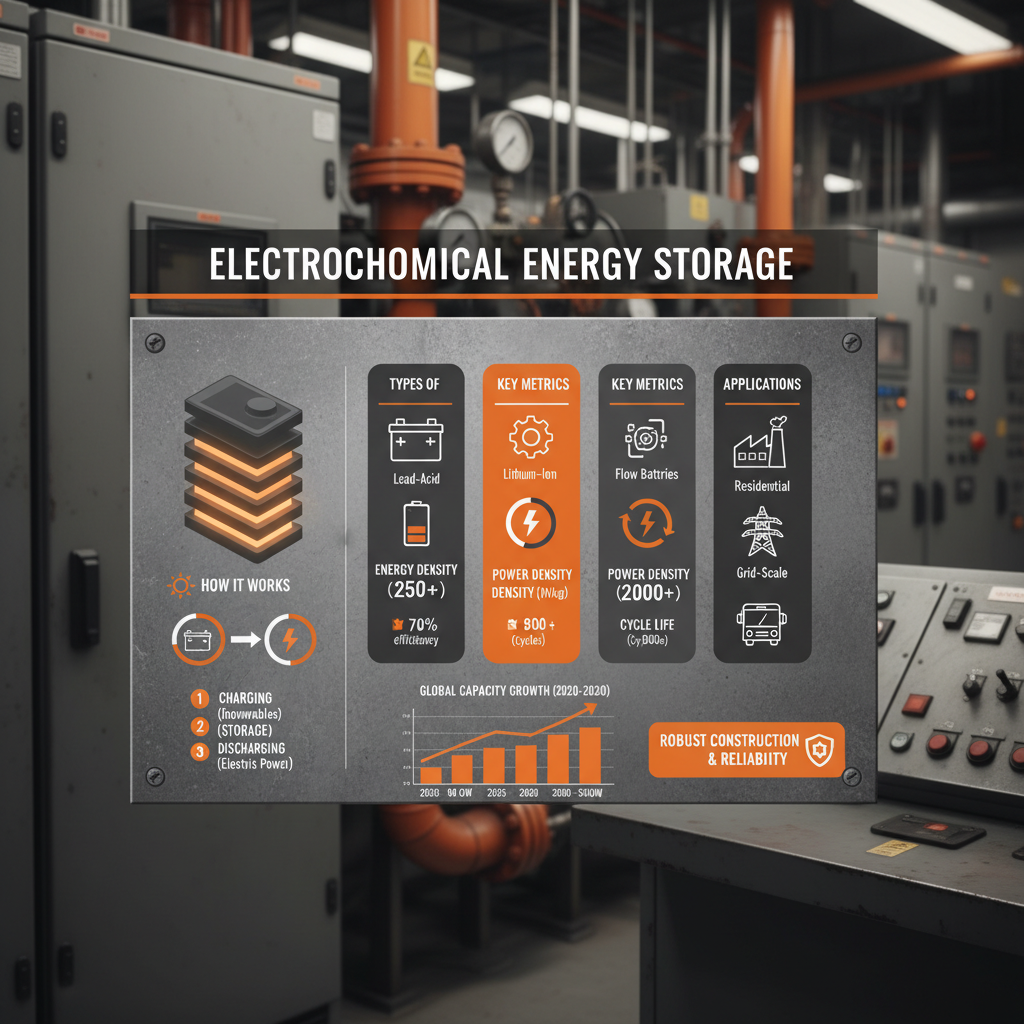
Several key factors determine the effectiveness of electrochemical energy storage systems. Energy Density refers to the amount of energy stored per unit of weight or volume – crucial for applications like electric vehicles where minimizing weight is paramount. Power Density describes how quickly energy can be delivered, important for applications requiring bursts of power.
Cycle Life defines the number of charge-discharge cycles a system can endure before its performance degrades significantly. Longer cycle lives translate to lower lifetime costs. Efficiency represents the percentage of energy recovered during discharge compared to the energy used for charging – higher efficiency minimizes energy losses.
Comparison of Key Electrochemical Energy Storage Metrics
Global Applications of Electrochemical Energy Storage
The applications of electrochemical energy storage are incredibly diverse. In the electricity grid, EES is used for frequency regulation, peak shaving, and renewable energy integration. Electric vehicles (EVs) rely heavily on batteries for propulsion, and the demand for higher-performance EV batteries is driving innovation in EES technology.
In post-disaster relief operations, portable EES systems can provide critical power for communication, medical equipment, and temporary shelters. In remote industrial zones lacking grid connectivity, EES coupled with renewable energy sources can offer a cost-effective and reliable power solution. Furthermore, residential energy storage systems are becoming increasingly popular, allowing homeowners to store solar energy for later use and reduce their reliance on the grid.
Advantages and Long-Term Value of EES
The advantages of electrochemical energy storage are numerous. From a cost perspective, while the upfront investment can be significant, the long-term operating costs are often lower than traditional fossil fuel-based generation, especially with decreasing battery prices. Sustainability is a key benefit, reducing reliance on finite fossil fuel reserves and minimizing carbon emissions.
The social impact is profound, improving energy access in underserved communities and enhancing grid resilience. EES enhances reliability by providing backup power during outages and stabilizing the grid against fluctuations in renewable energy generation. Trust in the energy supply is strengthened, fostering economic growth and improving quality of life. The innovative nature of EES drives technological advancement and creates new job opportunities.
Future Trends and Innovations in electrochemical energy storage
The future of electrochemical energy storage is marked by exciting innovation. Solid-state batteries, promising higher energy density and improved safety, are a major area of research. Sodium-ion batteries, utilizing more abundant materials, offer a potential alternative to lithium-ion. Advancements in flow battery technology are improving scalability and durability.
Digital transformation is playing a crucial role, with advanced battery management systems (BMS) optimizing performance and extending lifespan. Automation is streamlining manufacturing processes, reducing costs and improving quality control. The integration of EES with green energy initiatives and smart grids is essential for building a sustainable energy future.
Briefly summarize the core of "Theme Seven"
| Technology Type |
Current Development Stage |
Projected Cost (USD/kWh) |
Potential Applications |
| Lithium-ion |
Commercial |
$130 - $200 |
EVs, Grid Storage, Portable Electronics |
| Sodium-ion |
Pilot Production |
$80 - $150 |
Grid Storage, Low-Speed EVs |
| Solid-State Batteries |
R&D, Limited Production |
$250 - $500 |
High-Performance EVs, Aerospace |
| Flow Batteries |
Commercial, Scaling Production |
$300 - $600 |
Long-Duration Grid Storage |
| Zinc-Air Batteries |
Prototype, Development |
$100 - $200 |
Stationary Storage, Backup Power |
| Metal-Sulfur Batteries |
Demonstration Projects |
$200 - $350 |
Grid-Scale Energy Storage |
FAQS
Lithium-ion batteries offer higher energy density and are more mature technology, making them ideal for applications where weight and size are critical, such as electric vehicles. Sodium-ion batteries, however, utilize sodium, which is far more abundant and less expensive than lithium, potentially lowering costs. While sodium-ion batteries currently have lower energy density, they're showing promise for grid-scale energy storage and applications where cost is a significant factor.
Cycle life, the number of charge-discharge cycles a battery can withstand before significant degradation, directly impacts long-term costs. A longer cycle life means the battery can be used for a longer period, reducing the frequency of replacements and lowering the total cost of ownership. For applications like grid storage, where batteries are expected to operate for decades, high cycle life is paramount.
Some EES technologies, particularly lithium-ion batteries, can pose safety risks such as thermal runaway (overheating leading to fire or explosion). These risks are mitigated through robust battery management systems (BMS) that monitor temperature, voltage, and current, and prevent overcharging or discharging. Solid-state batteries are also being developed with inherently safer characteristics.
Renewable energy sources like solar and wind are intermittent, meaning their output fluctuates depending on weather conditions. Grid-scale energy storage helps to smooth out these fluctuations by storing excess energy generated during peak production and releasing it when demand exceeds supply. This ensures a stable and reliable power grid, even with a high penetration of renewables.
A Battery Management System (BMS) is an electronic system that manages a battery pack, protecting it from damage and maximizing its performance and lifespan. Key functions include monitoring cell voltages, temperatures, and currents, preventing overcharge and overdischarge, and balancing the charge between individual cells. A well-designed BMS is crucial for ensuring the safety and reliability of EES systems.
The production and disposal of batteries can have environmental impacts, including the extraction of raw materials and the potential for hazardous waste. However, significant efforts are being made to improve sustainability. This includes developing more environmentally friendly battery chemistries, implementing robust recycling programs to recover valuable materials, and reducing the overall carbon footprint of battery manufacturing processes.
Conclusion
Electrochemical energy storage has emerged as a critical enabler of a sustainable energy future. From enhancing grid stability and integrating renewable energy sources to powering electric vehicles and providing backup power in emergencies, its applications are wide-ranging and impactful. The key factors – energy density, power density, cycle life, and efficiency – continue to drive innovation and improvement in EES technologies.
Looking ahead, continued research and development in advanced materials, battery management systems, and recycling processes are crucial for unlocking the full potential of electrochemical energy storage. Investing in electrochemical energy storage isn’t just about technological advancement; it’s about building a more resilient, sustainable, and equitable energy system for generations to come.