Lithium, a soft, silvery-white alkali metal, has transitioned from a relatively obscure element to a critical component in the modern world. Its unique properties – lightweight nature, high electrochemical potential, and excellent thermal conductivity – make it indispensable for a rapidly evolving technological landscape. The demand for lithium is experiencing unprecedented growth, driven primarily by the expanding electric vehicle (EV) market and the burgeoning energy storage sector. Understanding the nuances of lithium production, application, and future trends is paramount for businesses, policymakers, and consumers alike.
Globally, lithium resources are concentrated in a handful of countries, often referred to as the “Lithium Triangle” – Argentina, Bolivia, and Chile. These nations hold the largest reserves of lithium-rich brine deposits. However, hard rock lithium mining is also significant, with Australia currently being the largest producer. The geopolitical implications of this concentrated resource base are substantial, raising concerns about supply chain security and the potential for price volatility. This necessitates strategic planning and diversification of lithium sources to ensure a sustainable and reliable supply for the future.
The rise of lithium isn’t solely about technology; it's intrinsically linked to global sustainability goals. As nations commit to reducing carbon emissions and transitioning towards renewable energy sources, lithium-ion batteries, powered by lithium, become essential for storing intermittent energy generated from solar, wind, and other clean sources. Therefore, lithium is not simply a material of the future, it is a critical enabler of a more sustainable and environmentally responsible energy system.
Introduction to Lithium
Lithium is the lightest metal and the least dense solid element. Its chemical symbol, Li, reflects its relatively low atomic weight. Discovered in 1817 by Johan August Arfwedson, lithium remained a laboratory curiosity for many years. It wasn't until the latter half of the 20th century that its potential began to be realized, initially in the realm of ceramics and lubricants, before its explosive growth as a battery material.
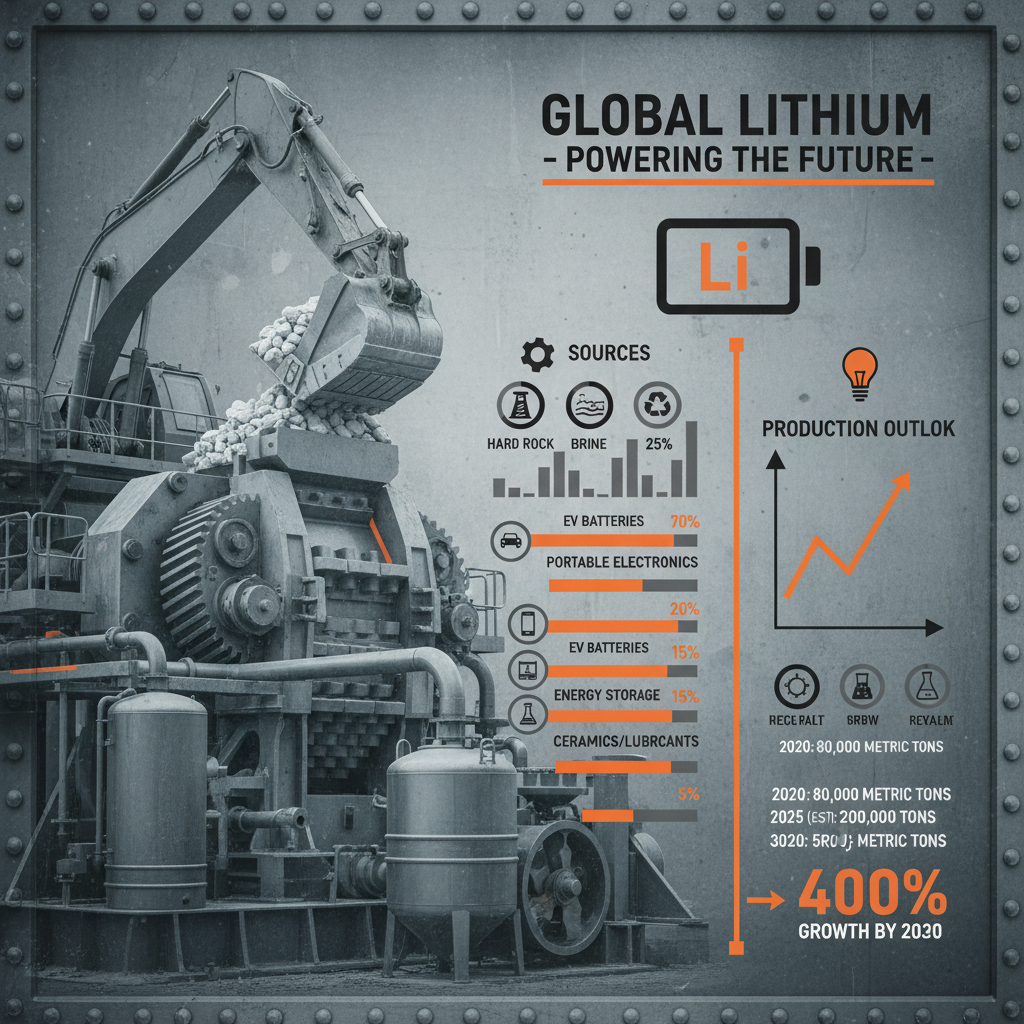
Today, the demand for lithium is soaring, propelled by the electric revolution. While traditionally used in psychiatric medications, greases, and specialized glass, its primary application has shifted dramatically. Over 80% of all lithium produced globally now goes into manufacturing lithium-ion batteries, powering everything from smartphones and laptops to electric vehicles and grid-scale energy storage systems. This shift has transformed lithium from a niche material into a strategic resource of global importance.
Global Relevance of Lithium
The global demand for lithium is projected to increase exponentially in the coming decades. Reports from the International Energy Agency (IEA) and the United Nations Environment Programme (UNEP) consistently highlight lithium as a critical mineral for achieving net-zero emissions targets. The accelerating adoption of electric vehicles is a primary driver, with sales consistently breaking records worldwide. This trend is compounded by the growing need for energy storage solutions to stabilize renewable energy grids.
The geopolitical landscape surrounding lithium is becoming increasingly complex. While the “Lithium Triangle” holds vast reserves, extraction processes can be environmentally challenging and require substantial investment. Supply chain disruptions, exacerbated by geopolitical tensions and logistical bottlenecks, pose significant risks. This has prompted nations and companies to explore alternative lithium sources, including geothermal brines and clay deposits, and to invest in recycling technologies.
Furthermore, the equitable distribution of benefits from lithium extraction is a growing concern. Indigenous communities in lithium-rich regions often face environmental and social challenges related to mining operations. Sustainable and responsible sourcing practices are therefore crucial to ensure that the lithium revolution benefits all stakeholders and does not come at the expense of local populations or the environment.
Defining Lithium and its Applications
Lithium (Li) is a chemical element with atomic number 3. It belongs to the alkali metal group and is characterized by its extreme reactivity. In its pure form, it’s a soft, silvery-white metal that can be cut with a knife. However, lithium rarely exists in its pure form in nature; it’s typically found combined with other elements in compounds such as spodumene, petalite, and various brine deposits.
The connection between lithium and modern industry is largely defined by its unique electrochemical properties. When used in batteries, lithium ions move between the anode and cathode, creating an electrical current. This process is highly efficient and allows for high energy density, making lithium-ion batteries ideal for portable electronics, electric vehicles, and large-scale energy storage. lithium’s low atomic mass also contributes to its effectiveness in battery technology.
Beyond batteries, lithium compounds have diverse applications. Lithium carbonate is a key ingredient in the manufacture of ceramics and glass, enhancing their strength and resistance to thermal shock. Lithium hydroxide is used in lubricating greases, providing excellent high-temperature performance. Historically, lithium salts have been used in the treatment of bipolar disorder, leveraging their mood-stabilizing properties.
Key Characteristics of Lithium
One of the most important characteristics of lithium is its incredibly high electrochemical potential. This means it readily gives up electrons, facilitating efficient energy storage in batteries. This high potential is directly linked to its low atomic weight and the small size of its ions, allowing for rapid movement and high power output.
Another crucial property is lithium's exceptionally low density. This contributes to the lightweight nature of lithium-ion batteries, making them ideal for applications where weight is a critical factor, such as electric vehicles and aerospace. The low density also improves the energy-to-weight ratio, allowing for longer driving ranges or flight times.
Lithium Extraction Method Comparison
Applications of Lithium Across Industries
The most significant application of lithium today is undoubtedly in the production of lithium-ion batteries. These batteries are ubiquitous, powering smartphones, laptops, tablets, and a growing range of other portable electronic devices. Their high energy density, lightweight design, and relatively long lifespan have made them the preferred choice for these applications.
The automotive industry is undergoing a dramatic transformation fueled by the shift to electric vehicles (EVs). Lithium-ion batteries are the core component of EVs, enabling longer driving ranges and faster charging times. The adoption of EVs is accelerating globally, driving demand for lithium and creating a massive opportunity for battery manufacturers and lithium producers.
The Advantages of Lithium Technology
Lithium-ion battery technology offers several key advantages over traditional battery chemistries. These include higher energy density, allowing for smaller and lighter batteries with longer runtimes. They also exhibit lower self-discharge rates, meaning they retain their charge for longer periods when not in use. This makes them ideal for applications where reliability and long-term performance are critical.
Beyond performance, lithium technology contributes to sustainability. EVs powered by lithium-ion batteries produce zero tailpipe emissions, reducing air pollution and mitigating climate change. The increasing use of renewable energy sources coupled with lithium-ion energy storage systems creates a cleaner and more resilient energy grid.
Finally, the relative abundance of lithium (although concentrated geographically) and the ongoing development of recycling technologies offer the potential for a secure and sustainable lithium supply chain. Investments in research and development are focused on improving battery performance, reducing costs, and minimizing the environmental impact of lithium extraction and processing.
Future Innovations in Lithium Technology
Research and development efforts are focused on several key areas to enhance lithium technology. Solid-state batteries, which replace the liquid electrolyte with a solid material, offer the potential for increased energy density, improved safety, and faster charging times. These are considered a next-generation battery technology with the potential to revolutionize the EV industry.
Another area of innovation is lithium-sulfur batteries, which offer even higher theoretical energy density than lithium-ion batteries. However, challenges remain in terms of cycle life and stability. Direct lithium extraction (DLE) technologies are also gaining traction, promising more efficient and environmentally friendly lithium extraction from brine deposits.
Furthermore, advancements in battery recycling technologies are crucial for creating a circular economy for lithium. Improved recycling processes can recover valuable materials from end-of-life batteries, reducing the need for new mining and minimizing environmental impact. These innovations will be vital for ensuring a sustainable and responsible lithium supply chain for the future.
Challenges and Solutions
Despite its numerous advantages, lithium faces several challenges. Geopolitical concentration of resources creates supply chain vulnerabilities, as highlighted earlier. Environmental concerns related to brine extraction and hard rock mining, including water usage and habitat disruption, need to be addressed through sustainable practices and responsible sourcing.
The high cost of lithium and battery production remains a barrier to wider adoption, particularly in developing countries. Innovation in extraction technologies, battery chemistry, and manufacturing processes is crucial for reducing costs and making lithium technology more accessible. Furthermore, investment in battery recycling infrastructure is essential for minimizing environmental impact and reducing reliance on primary lithium sources.
Solutions lie in diversification of lithium sources, exploring alternative extraction methods like DLE, promoting responsible mining practices, and investing heavily in battery recycling and materials science. Collaboration between governments, industry, and research institutions is crucial for overcoming these challenges and realizing the full potential of lithium for a sustainable future.
Summary of Lithium Challenges and Potential Solutions
| Challenge |
Impact on Lithium Supply |
Potential Solution |
Implementation Difficulty (1-10) |
| Geopolitical Concentration |
Supply Chain Vulnerability |
Diversification of Sources |
7 |
| Environmental Impact of Brine Extraction |
Water Depletion, Habitat Disruption |
Direct Lithium Extraction (DLE) |
6 |
| High Extraction Costs |
Limited Accessibility |
Technological Advancements |
8 |
| Limited Recycling Infrastructure |
Resource Depletion, Waste Management |
Investment in Recycling Technologies |
5 |
| Fluctuating Lithium Prices |
Economic Uncertainty |
Long-Term Supply Contracts |
4 |
| Demand exceeding supply |
Potential delays in green energy transition |
Increase Mining and processing capacity |
9 |
FAQS
Lithium extraction, particularly brine extraction, can consume significant amounts of water in arid regions, potentially impacting local ecosystems and communities. Hard rock mining involves habitat disruption and the potential release of harmful chemicals. Responsible mining practices, water management strategies, and the development of less environmentally damaging extraction technologies, such as Direct Lithium Extraction (DLE), are vital to mitigate these concerns.
Lithium-ion batteries are the dominant power source for EVs. Their high energy density, lightweight design, and relatively long lifespan enable longer driving ranges and faster charging times, making EVs a viable alternative to internal combustion engine vehicles. As EV sales increase globally, the demand for lithium correspondingly rises, driving innovation and investment in the lithium industry.
Direct Lithium Extraction (DLE) refers to a suite of technologies aimed at extracting lithium directly from brine resources without the need for large evaporation ponds, traditionally used. DLE methods typically offer faster processing times, reduced water consumption, and a smaller environmental footprint. However, DLE technologies are still under development and their large-scale viability is being evaluated.
Lithium battery recycling is crucial for creating a sustainable supply chain. Currently, recycling rates are relatively low. However, advancements in recycling technologies, coupled with increasing regulatory pressure, are expected to significantly improve recycling rates in the coming years. Effective recycling can recover valuable materials like lithium, cobalt, and nickel, reducing reliance on primary mining.
The concentration of lithium resources in a limited number of countries creates geopolitical vulnerabilities. Trade tensions, political instability, and resource nationalism can disrupt supply chains and impact lithium prices. Diversification of lithium sources, investment in domestic production, and the development of strong supply chain partnerships are essential to mitigate these risks.
While lithium-ion batteries currently dominate the market, research is ongoing into alternative battery technologies, including sodium-ion, solid-state, and lithium-sulfur batteries. These alternatives offer potential advantages in terms of cost, safety, and sustainability. However, they are still in early stages of development and face technical challenges before widespread adoption.
Conclusion
Lithium has evolved from a relatively obscure element into a cornerstone of the modern technological landscape, fundamentally shaping the transition to a sustainable energy future. Its unique properties, particularly its electrochemical potential and low density, make it indispensable for powering electric vehicles, storing renewable energy, and enabling a vast array of portable electronic devices. Addressing the challenges surrounding resource concentration, environmental impact, and recycling will be paramount to ensuring a secure and responsible lithium supply chain.
Looking ahead, continued innovation in lithium extraction, battery technology, and recycling processes is crucial. Investing in research and development, promoting responsible mining practices, and fostering international collaboration will unlock the full potential of lithium and pave the way for a cleaner, more sustainable world. For more information on lithium and its applications, visit our website: www.acdcbess.com.